
Six Gulf States Prioritize China's Three-Star Green Building Panels
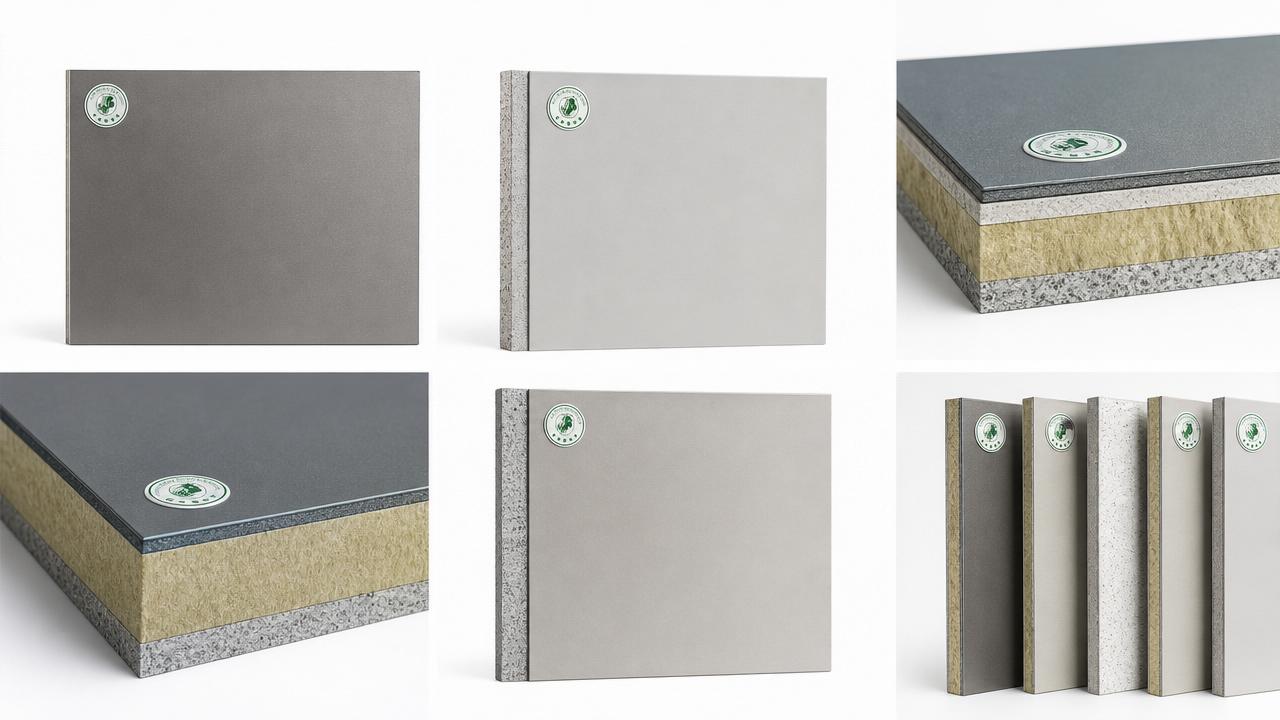
On May 26, 2026, building associations from Saudi Arabia, the United Arab Emirates, Qatar, and three other Gulf countries jointly issued the 2026 Gulf Green Curtain Wall and Composite Panel Procurement White Paper, introducing new procurement requirements for façade materials in major infrastructure projects—including NEOM and The Line—and signaling a strategic shift toward low-carbon supply chain compliance.
Official Release of the Gulf Green Procurement Framework
On May 26, 2026, construction associations representing six Gulf Cooperation Council (GCC) member states published the 2026 Gulf Green Curtain Wall and Composite Panel Procurement White Paper. The document formally includes composite panels certified under China’s Three-Star Green Building Materials Certification Program on its ‘Priority Recommended List’. It also streamlines technical admission procedures for such products in flagship developments such as NEOM and The Line. Additionally, the White Paper mandates that importers submit full life-cycle carbon footprint declarations aligned with ISO 14040.
Impact Across Supply Chain Roles
Export-oriented trading enterprises
These firms face revised qualification requirements for tender participation in GCC public infrastructure projects. The inclusion of China’s Three-Star certification as a priority criterion reduces pre-qualification barriers—but only for verified, documented compliance. Firms must now ensure their product documentation explicitly references this certification level and aligns with GCC technical evaluation protocols.
Raw material suppliers
Upstream suppliers—particularly those providing core substrates, insulation layers, or surface coatings for composite panels—must anticipate increased demand for traceable, low-embodied-carbon inputs. The ISO 14040 carbon footprint requirement applies across the entire value chain; therefore, material-level environmental data (e.g., EPDs or primary energy use metrics) will be essential for downstream manufacturers’ compliance reporting.
Panel manufacturing enterprises
Manufacturers must verify that their production processes meet both the performance thresholds of China’s Three-Star standard and the functional specifications referenced in GCC project technical bids. Crucially, they must integrate life-cycle assessment (LCA) methodology into internal quality systems—not just for final declaration, but to support real-time carbon inventory tracking and supplier verification.
Supply chain service providers
Logistics, certification support, and technical documentation agencies must adapt to new verification workflows. Services now need to cover LCA data validation, third-party attestation of Three-Star certification authenticity, and alignment of technical dossiers with GCC-specific submission templates—especially for NEOM’s digital twin integration requirements.
Key Compliance Actions for Exporters
Verify Three-Star certification scope and validity
Confirm that the specific panel model, composition, and production batch are covered under an active, non-expired Three-Star certificate issued by an authorized Chinese certification body. Retrospective certification or generic category-level approvals are insufficient for GCC priority listing eligibility.
Prepare ISO 14040-compliant carbon footprint documentation
Develop or commission a cradle-to-gate (or cradle-to-site, if applicable) LCA report conforming to ISO 14040/14044. The report must include transparent assumptions, allocation methods, primary data sources, and peer-reviewed database references—no generic industry averages accepted for flagship project submissions.
Align technical bid documentation with GCC project specifications
Update product datasheets, test reports (e.g., fire resistance, wind load, thermal transmittance), and installation guidelines to reflect NEOM and The Line’s unique performance benchmarks—particularly regarding desert climatic resilience, dust ingress protection, and digital BIM object compatibility.
Strengthen supplier carbon data governance
Implement contractual clauses requiring upstream suppliers to provide validated environmental data. Establish internal audit protocols to cross-check material declarations against actual LCA inputs—anticipating GCC procurers’ growing emphasis on supply chain transparency and secondary verification.
Strategic Shift in Regional Procurement Standards
Analysis shows that this White Paper reflects more than a green procurement update—it signals the institutionalization of lifecycle-based sustainability criteria within GCC mega-project governance. Observably, the explicit linkage between national-level green building certifications (like China’s Three-Star system) and regional technical admission pathways suggests a move toward interoperable, cross-border sustainability frameworks. What deserves closer attention is the de facto elevation of carbon accounting from a voluntary reporting exercise to a mandatory technical prerequisite—implying longer lead times for compliance readiness and higher upfront investment in LCA capacity among mid-tier manufacturers.
Toward Integrated Low-Carbon Market Access
This development marks a significant step in harmonizing sustainability benchmarks across key construction markets. While the White Paper does not replace existing GCC standards (e.g., SASO, GSO), it introduces a new layer of evaluative weight—where green certification and carbon accountability jointly shape competitive positioning. Success will depend less on isolated product excellence and more on systemic readiness: integrated documentation, verifiable upstream data, and agile technical alignment with evolving project-level requirements.
Source Attribution and Monitoring Guidance
This article was generated exclusively from the provided title, event date (May 26, 2026), and event summary. Specific official source links were not provided in the input and should be verified continuously. Stakeholders are advised to monitor forthcoming implementation guidelines from the participating Gulf building associations, updates to NEOM’s Technical Requirements Manual, and any formal adoption notices issued by GCC Standardization Organization (GSO) or national regulatory bodies regarding carbon footprint verification protocols and Three-Star certification recognition procedures.
Industry Briefing
Get the top 5 industry headlines delivered to your inbox every morning.