Common hygienic construction mistakes that raise risks
In hygienic construction, small execution errors can quickly become major contamination, safety, and compliance problems. For quality control and safety managers, the key question is not whether mistakes happen, but which ones create the highest operational risk and how early they can be controlled.
The most serious failures usually come from poor material decisions, weak interface detailing, incomplete cleaning logic, and inconsistent site discipline. These issues may look minor during installation, yet they often lead to microbial growth, cleaning difficulty, water damage, product recalls, failed audits, or costly rework after handover.
This article focuses on the common hygienic construction mistakes that raise risks in real projects. It also explains how quality and safety teams can prevent them through better specifications, inspections, sequencing, and acceptance criteria.
Why hygienic construction failures matter more than many teams expect
In hygienic environments, construction quality directly affects health protection, maintainability, and regulatory confidence. A visually acceptable finish is not enough if joints trap moisture, surfaces shed particles, or service penetrations cannot be properly cleaned and sealed.
For quality control personnel, the challenge is that many hygienic construction risks stay hidden until operation begins. Problems often appear only after repeated washdowns, temperature cycling, chemical exposure, or daily contact with staff and users.
For safety managers, these mistakes also carry broader consequences. Slips, mold growth, water intrusion, damaged insulation, and contaminated maintenance zones can escalate from hygiene concerns into worker safety incidents and asset performance failures.
The most common mistake: choosing materials for appearance or cost instead of hygiene performance
One of the biggest errors in hygienic construction is selecting materials that look clean but are not suitable for real hygienic use. Smooth appearance alone does not guarantee resistance to moisture, chemicals, abrasion, thermal shock, or microbial retention.
Common examples include porous finishes, absorbent backing layers, low-grade sealants, poorly specified grout, or wall panels with weak edge protection. These materials may pass visual review during installation but degrade quickly once exposed to cleaning chemicals and moisture.
Quality teams should verify more than product brochures. They need evidence of cleanability, joint compatibility, slip resistance where needed, resistance to cleaning regimes, and performance under actual service conditions rather than showroom conditions.
A reliable hygienic construction approach starts with performance-based selection. Ask whether the surface can be cleaned repeatedly, whether it resists water penetration, and whether adjacent materials expand, bond, and age in compatible ways.
Poor joint detailing: the hidden source of contamination and recurring rework
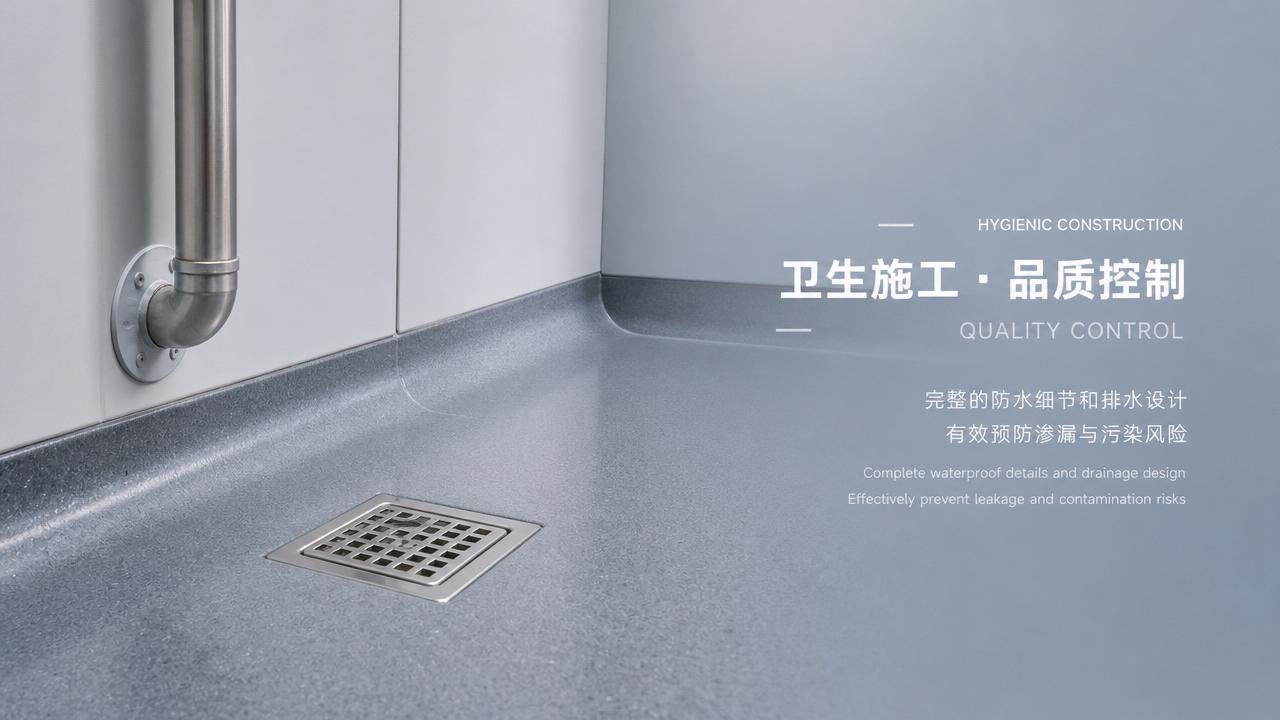
Many hygienic construction failures begin at joints rather than on the main surface. Corners, floor-to-wall transitions, panel seams, drain edges, and penetrations are where dirt, moisture, and microorganisms are most likely to collect.
Sharp internal corners are a common mistake because they are difficult to clean thoroughly. In hygienic settings, coved transitions and well-finished radii are usually safer because they reduce residue buildup and allow easier cleaning access.
Another frequent problem is inconsistent joint width or poorly controlled sealant application. Voids, bubbles, incomplete adhesion, and contamination during curing reduce long-term performance and create early failure points that are expensive to repair later.
QC managers should inspect joint design before installation begins, not only after completion. If the detail itself is difficult to execute consistently, it will almost always produce variable quality in the field.
Ignoring drainage logic and water movement during construction planning
Water is one of the main drivers of hygienic risk. Yet many projects still treat drainage as a basic plumbing matter instead of a core hygienic construction priority linked to floor geometry, cleaning methods, and equipment layout.
Typical mistakes include inadequate floor slopes, poorly located drains, back-falls near walls, and ponding zones under fixtures or service equipment. Even small standing water areas can support contamination, damage finishes, and increase slip hazards.
Another issue is mismatch between floor finishes and drainage details. If the drain edge, grate, or surrounding finish cannot be cleaned easily, the drainage point itself becomes a contamination hotspot rather than a hygiene control feature.
Quality and safety teams should review drainage with real cleaning workflows in mind. The question is not simply whether water can leave the room, but whether it leaves quickly, completely, and without creating inaccessible wet zones.
Unsealed or badly managed service penetrations
Pipes, conduits, cable trays, ducts, and supports often pass through walls, ceilings, and floors. These penetrations are among the most neglected areas in hygienic construction, especially when multiple trades work under time pressure.
When penetrations are oversized, poorly sealed, or patched with incompatible materials, they create gaps that trap contaminants and allow moisture migration. In some spaces, they can also compromise fire integrity, air control, or pressure management.
A common site failure happens when a hygienic wall or ceiling is completed, then reopened by another trade without restoring the original hygienic detail. This sequencing issue can undo earlier quality work in a matter of hours.
To reduce risk, managers should maintain a penetration register, standardize approved sealing details, and require final inspection after all late-stage service works are complete. Penetration quality should never be accepted on appearance alone.
Weak coordination between trades that damages hygienic integrity
Hygienic construction depends on interfaces, and interfaces fail when trades work in isolation. Flooring, wall systems, MEP installations, ceiling access, equipment mounting, and waterproofing must be coordinated as one risk-managed system.
For example, a perfectly installed hygienic wall panel can lose integrity if equipment installers drill unapproved fixings through it. Likewise, waterproofing can fail if floor cutting or support installation occurs after membrane completion.
Many recurring defects do not come from lack of skill but from lack of sequence control. Each trade may complete its own scope correctly while still contributing to a final assembly that is difficult to clean, inspect, or maintain.
Quality control leaders should use hold points at interface stages, especially before covering works. Safety managers should align these controls with permit systems and method statements so that no trade alters hygienic assemblies without review.
Allowing rough, damaged, or difficult-to-clean finishes to pass inspection
Surface condition is central to hygienic construction, yet inspections sometimes focus too heavily on color, alignment, or obvious defects. A finish can appear acceptable while still being too rough, scratched, chipped, or uneven for hygienic use.
Damaged coatings, exposed substrate edges, and poorly repaired surfaces become long-term maintenance liabilities. Once cleaning chemicals and repeated contact act on these weak points, deterioration accelerates and contamination risk rises.
This is especially important around high-contact areas, cleaning zones, and equipment bases. If a surface cannot remain intact under real operational use, it should not be signed off simply because the installation looks complete on handover day.
Inspection criteria should define measurable finish expectations, not vague judgments. Teams should evaluate continuity, cleanability, moisture resistance, repair quality, and access for future sanitation rather than relying on visual neatness alone.
Using the wrong sealants, adhesives, and fixing methods
Small consumables often determine whether hygienic construction succeeds. Incompatible sealants, low-performance adhesives, and exposed mechanical fixings can undermine otherwise high-quality materials and create hidden hygiene risks over time.
Typical failures include sealants that shrink, discolor, crack, or lose adhesion under cleaning chemicals. Adhesives may soften under moisture exposure or fail when substrate preparation is incomplete. Exposed fixings can introduce corrosion, dirt traps, and cleaning obstacles.
Quality managers should confirm compatibility across the full assembly, not product by product. A good wall panel combined with a poor sealant system is not a hygienic solution. The assembly must perform together throughout its service life.
Submittal review should therefore include chemical resistance, substrate suitability, expected movement, curing conditions, and maintenance requirements. These details often determine whether a hygienic installation remains stable after the first year of operation.
Inadequate site cleanliness during installation
Hygienic construction does not begin at handover. It begins during installation, when dust, debris, moisture, and careless storage can contaminate materials before they are even put into service.
Common mistakes include storing panels on dirty floors, leaving joint areas exposed to dust before sealing, allowing wet trades to contaminate dry-finish zones, or installing sensitive components after they have been scratched or warped on site.
Another risk comes from poor temporary protection. Finished hygienic surfaces are often damaged by ladders, tools, packaging movement, or later-stage trade access. Once damaged, field repairs may not restore the same cleanability or durability.
Safety and QC teams should enforce zoning, storage rules, moisture control, and protection protocols. Clean installation conditions are not cosmetic preferences; they are necessary controls that protect hygienic performance and reduce avoidable defects.
Not designing or building for cleaning and maintenance access
A space may comply on paper yet still fail in practice if cleaners and maintenance teams cannot reach critical surfaces. Hygienic construction should support routine sanitation, inspection, and repair without creating hidden or inaccessible contamination points.
Frequent design-and-build mistakes include tight gaps behind equipment, inaccessible service voids, complex brackets, unnecessary horizontal ledges, and enclosures that cannot be opened and resealed properly. These features turn routine cleaning into partial cleaning.
Quality managers should ask a practical question during reviews: can this area be cleaned, inspected, dried, and maintained without dismantling unrelated systems or damaging hygienic finishes? If not, the risk remains built into the asset.
This issue matters especially in commercial kitchens, sanitary spaces, technical rooms, and wet areas where frequent cleaning is part of daily operations. Buildability must include cleanability and maintainability from the start.
Late inspection instead of process-based quality control
One of the most costly management mistakes is relying on final inspection to catch hygienic construction problems. By the time visible defects appear, many root causes are already concealed behind finishes or embedded in completed interfaces.
Effective control comes from staged verification. Material receipt checks, substrate inspections, mock-ups, hold points, curing confirmation, penetration reviews, and pre-handover hygiene checks are all more effective than end-stage visual acceptance alone.
Mock-ups are especially valuable for hygienic areas because they reveal practical issues with joints, cleanability, sequencing, and material compatibility before full-scale installation begins. They also help align expectations among contractors, consultants, and operators.
For quality and safety managers, process control reduces uncertainty. It converts hygienic construction from a reactive defect-finding exercise into a structured prevention system tied to evidence, accountability, and repeatable acceptance criteria.
How quality and safety managers can reduce hygienic construction risk in real projects
The best results come when hygienic construction is treated as a performance system rather than a finishing package. Managers should start by identifying high-risk zones, critical interfaces, cleaning exposures, and operational constraints before work begins.
Next, translate those risks into project controls. Define approved materials, standard details, inspection checklists, mock-up requirements, trade sequencing rules, and nonconformance escalation paths. Vague expectations almost always produce inconsistent outcomes.
It is also essential to involve operations or facility users early. Their cleaning methods, traffic patterns, maintenance routines, and hygiene expectations often reveal practical risks that may not be obvious in drawings or procurement documents.
Finally, document lessons learned across projects. Repeated hygienic construction failures usually follow familiar patterns. A disciplined feedback loop helps teams improve specifications, contractor onboarding, audit readiness, and long-term building hygiene performance.
Conclusion
Common hygienic construction mistakes are rarely dramatic at the moment they occur. Most begin as small omissions, rushed fixes, or poorly coordinated details. Yet these minor defects can lead to major contamination, compliance, safety, and maintenance consequences.
For quality control and safety managers, the priority is clear: focus on materials, joints, drainage, penetrations, surface condition, trade coordination, and process-based inspection. These are the areas where early intervention delivers the greatest reduction in risk.
When hygienic construction is managed with clear standards and disciplined execution, buildings become easier to clean, safer to operate, and more resilient over time. That is the real value of getting hygienic construction right from the start.
Industry Briefing
Get the top 5 industry headlines delivered to your inbox every morning.