How to Choose Interior Architecture Materials for High-Traffic Commercial Spaces
How to Choose Interior Architecture Materials for High-Traffic Commercial Spaces
Choosing the right interior architecture materials for high-traffic commercial spaces is critical to long-term performance, safety, and brand impact.
The real challenge is not appearance alone.
It is about durability, cleaning cycles, code compliance, repair speed, and total lifecycle cost.
In busy retail, hospitality, healthcare, transport, and mixed-use projects, weak material choices quickly become operational problems.
This guide explains how to select interior architecture materials that work harder, last longer, and support smarter commercial delivery.
Start with Traffic Reality, Not Sample-Board Appeal
Every material decision should begin with actual use intensity.
A hotel lobby, outpatient clinic, airport restroom, and premium office pantry all experience traffic in different ways.
That means the same interior architecture materials will not perform equally across all spaces.
Look first at footfall, rolling loads, moisture exposure, cleaning chemicals, impact risk, and turnaround pressure.
From a project delivery view, this step prevents expensive late-stage substitutions.
It also helps align design intent with facility operations from day one.
Key questions before specifying materials
- How many daily users will touch, walk on, or lean against the surface?
- Will trolleys, luggage, carts, or equipment cross the area regularly?
- Does the zone require anti-slip, anti-bacterial, or water-resistant performance?
- How quickly must damaged finishes be repaired without service interruption?
- Are replacement parts or matching batches easy to source globally?
These answers create a practical filter for interior architecture materials before aesthetics narrow the shortlist.
Focus on Performance Criteria That Matter in Operation
In high-traffic environments, operational performance usually decides whether a material is successful.
A beautiful finish that stains, chips, or delaminates too early creates downtime and budget pressure.
The best interior architecture materials balance visible quality with technical resilience.
Core performance checks
- Abrasion resistance for flooring, counters, and door surfaces.
- Slip resistance in wet zones, entries, and food-service areas.
- Impact resistance for wall panels, corners, partitions, and trims.
- Moisture stability in washrooms, kitchens, and cleaning-intensive zones.
- Chemical resistance where disinfectants or strong cleaners are used daily.
- Fire performance based on local code, occupancy type, and egress strategy.
- Acoustic behavior in spaces that require comfort and speech clarity.
Recent market shifts make this even more important.
Stricter hygiene expectations, carbon targets, and maintenance labor costs are reshaping material selection decisions.
This is where informed specification becomes a business advantage, not just a design step.
Choose by Zone, Not by Generic Category
One of the most common mistakes is using the same decision logic across the whole project.
High-traffic commercial spaces work better when interior architecture materials are assigned by zone-specific risk.
Entrance and circulation areas
These areas need excellent wear resistance and strong dirt control.
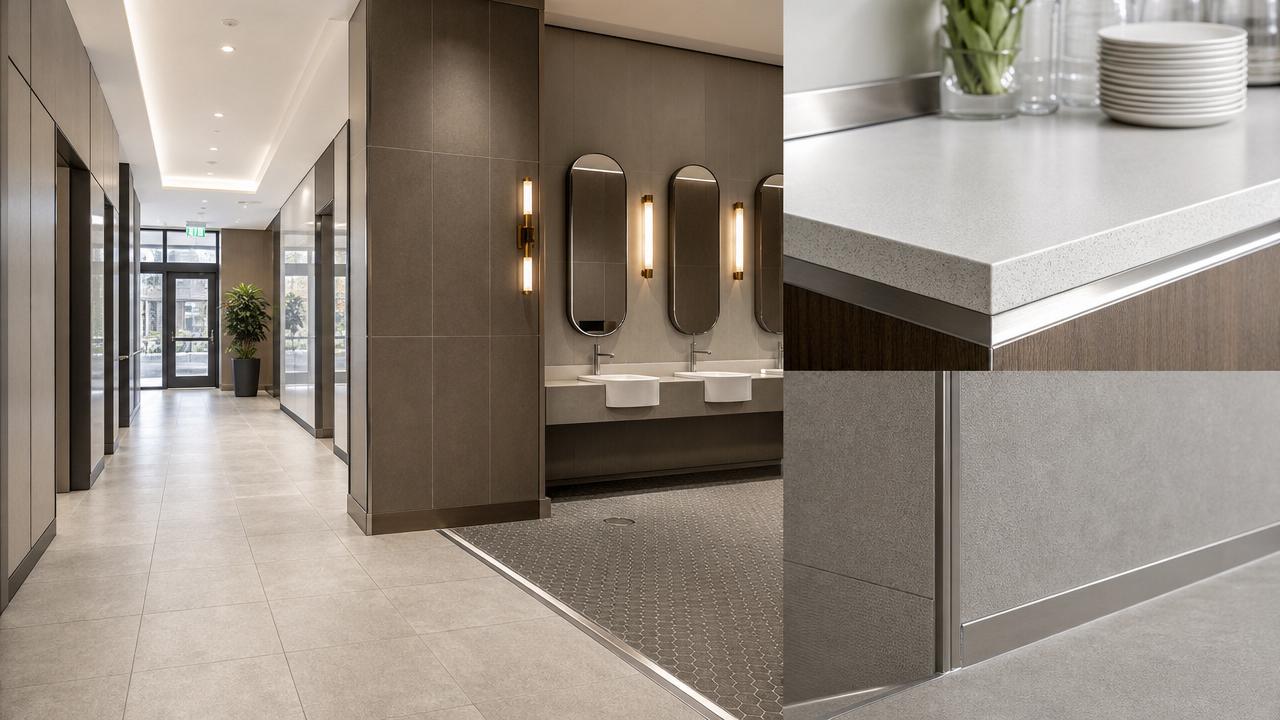
Porcelain tile, dense stone alternatives, heavy-duty LVT, and protected metal trims often perform well.
Avoid finishes that show scratching too easily under grit and repeated wheeled traffic.
Restrooms and sanitary zones
Moisture, hygiene, and cleaning frequency dominate material choice here.
Specify non-porous surfaces, anti-slip floors, corrosion-resistant hardware, and easy-clean joints.
This aligns with GIAM’s focus on sanitary spaces and high-value material intelligence.
Food, pantry, and kitchen-related zones
Heat, moisture, grease, and cleaning products all matter.
Use interior architecture materials that support hygienic detailing and quick maintenance access.
Compact surfaces, treated metals, and durable ceramic systems often reduce long-term service issues.
Walls, corners, and touchpoints
Wall protection is often undervalued during procurement.
Yet repeated impact from luggage, chairs, carts, and crowd movement can quickly age a space.
High-pressure laminates, impact-resistant panels, and durable paint systems should be judged on maintenance cycles, not only upfront price.
Balance Lifecycle Cost with Brand Expectations
The cheapest material rarely stays cheap in a heavy-use setting.
Smart selection of interior architecture materials should compare full ownership cost over time.
That includes installation, cleaning, repair, replacement frequency, downtime, and appearance retention.
A premium-looking commercial space also needs visual consistency.
If finishes fade unevenly, stain easily, or age badly, brand value drops fast.
In practice, the best interior architecture materials often deliver lower total cost because they reduce operational friction.
Check Compliance, Sustainability, and Supply Risk Early
Specification risk often grows when compliance checks happen too late.
Commercial projects should review certifications, emissions data, and supply continuity during early selection.
This is especially relevant as global standards on fire safety, VOC limits, water efficiency, and carbon reporting continue to evolve.
GIAM’s intelligence-led approach reflects this reality.
Material decisions are now tied to trade conditions, regulatory shifts, and greener building expectations.
What to verify before approval
- Fire ratings and local code acceptance.
- VOC emissions and indoor air quality compliance.
- Water-related suitability for wet and sanitary environments.
- Recycled content, EPDs, or carbon-related declarations where required.
- Lead times, batch consistency, and regional distribution reliability.
This early screening helps protect schedules and reduces the risk of rushed, lower-quality substitutions later.
Build a Practical Selection Framework
A clear framework turns material selection into a repeatable process.
That matters when teams must evaluate multiple suppliers across several space types.
A simple evaluation sequence
- Define traffic intensity and operational conditions by zone.
- Set minimum technical requirements before reviewing finishes.
- Compare interior architecture materials on lifecycle cost, not unit price.
- Check mockups, cleaning tests, and sample aging behavior.
- Confirm compliance documents and supply-chain resilience.
- Approve materials with operations, maintenance, and design teams together.
This kind of cross-functional review avoids common disconnects.
For example, a finish may satisfy design goals yet fail under real cleaning protocols.
A stronger process reveals those issues before they affect delivery.
Make Material Intelligence Part of Project Strategy
Choosing interior architecture materials is no longer a narrow specification exercise.
It now sits at the intersection of durability, hygiene, sustainability, cost control, and brand performance.
The strongest commercial spaces are built with materials that match actual behavior, not idealized showroom conditions.
That is also why intelligence platforms like GIAM matter.
Better visibility into material science, sanitary systems, smart space trends, and global supply shifts supports better decisions on the ground.
When selecting interior architecture materials, focus on zones, verify performance, and test lifecycle assumptions early.
That approach reduces risk and helps commercial spaces stay safe, efficient, and visually credible for longer.
The next smart step is simple: review current specifications against real operating conditions, then refine material choices before they become expensive site problems.
Industry Briefing
Get the top 5 industry headlines delivered to your inbox every morning.