
Smart Home Integration Solutions: What to Check Before Choosing a Scalable System
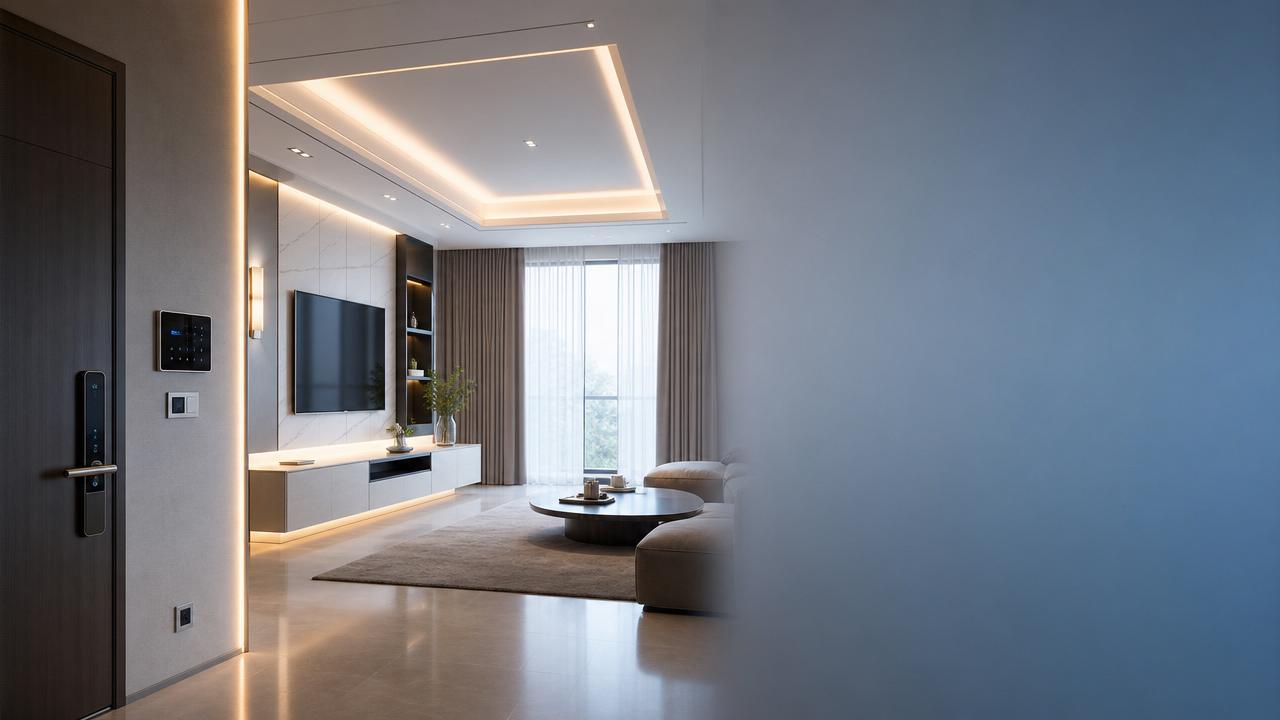
Why do scalable smart home integration solutions matter more than feature lists?
Choosing smart home integration solutions feels exciting at first. Lights, locks, audio, shading, and climate control promise convenience. The real question is whether the system still fits five years later.
A scalable setup is not simply larger. It is easier to expand, safer to update, and more stable when new devices enter the home. That is where many buying mistakes begin.
In practical terms, smart home integration solutions should support changing routines, renovation stages, and future technologies. A polished app matters, but long-term compatibility matters more.
This is also why GIAM often frames smart living through building systems, material standards, and spatial intelligence rather than gadgets alone. A connected home performs best when technology, layout, water use, security, and energy strategy work together.
So before comparing brands, it helps to ask a more grounded question: will these smart home integration solutions grow with the property, or will they lock the space into a narrow ecosystem?
What should you check first before choosing smart home integration solutions?
The first review should focus on foundations, not visual demos. Many systems look similar on day one, yet differ sharply in upgrade paths and maintenance demands.
A useful shortlist usually starts with these checkpoints:
- Protocol support, including Wi-Fi, Zigbee, Z-Wave, Thread, Matter, or KNX where relevant.
- Device compatibility across lighting, HVAC, locks, sensors, kitchen appliances, and bathroom controls.
- Local control options if the internet drops or cloud services change.
- Cybersecurity practices, including encryption, account controls, and update frequency.
- Support life, warranty clarity, and availability of replacement parts or certified installers.
Needless to say, not every home needs enterprise-level control. Even so, weak compatibility can become expensive after a simple remodel or appliance upgrade.
In homes where kitchens, baths, and entry systems are being upgraded together, smart home integration solutions should also be checked against plumbing layouts, switch positions, ventilation needs, and cabinet design. Smart functions do not live apart from the built environment.
A quick decision table that avoids common missteps
Before going deeper, this comparison table helps separate short-term convenience from long-term value.
Are all smart home integration solutions equally flexible in real homes?
Not really. Some systems are ideal for small retrofits. Others work better in new construction or full renovation. The right answer depends on wiring conditions, device density, and how many systems need to communicate.
For example, a simple apartment may only need lighting, smart locks, and thermostatic control. A larger property may combine shading, air quality, leak sensors, multi-room audio, outdoor lighting, and kitchen automation.
That difference changes what “flexible” really means. Wireless systems can reduce installation disruption. Wired systems may offer stronger stability in larger or more complex spaces.
A balanced decision often comes from matching the control architecture to the property stage:
- Retrofit projects benefit from smart home integration solutions with strong wireless interoperability.
- New builds can plan for wired backbones, cleaner panel layouts, and future equipment zones.
- Kitchen and bath upgrades need careful checks around moisture protection, power access, and appliance compatibility.
This broader view aligns with GIAM’s focus on residential civilization and commercial space evolution. Smart living standards improve when integration decisions respect both digital control and physical building logic.
How do you compare open ecosystems and closed ecosystems without getting lost?
This is one of the most common buying questions. Open ecosystems usually support more brands and standards. Closed ecosystems usually offer tighter user experience and simpler setup.
Neither approach is automatically better. The decision depends on how much freedom, control, and future expansion you expect.
Open smart home integration solutions are often stronger when you want gradual upgrades. They make it easier to replace a lock, add sensors, or change a lighting brand later.
Closed systems can be attractive when reliability and uniform design are the top priorities. The trade-off is that switching later may be harder and more expensive.
A practical rule is to ask three things before deciding:
- Can this platform integrate future devices without replacing the main controller?
- If one brand exits the market, can equivalent products still join the system?
- Will daily use remain simple for everyone in the home?
If the answer to the first two is no, the system may not be as scalable as it appears.
Which risks do people overlook when evaluating smart home integration solutions?
The biggest risk is assuming integration means permanence. Many systems work beautifully at launch, then struggle when software policies, subscriptions, or hardware lines change.
Security is another overlooked point. A connected lock, camera, or water valve is not just a convenience layer. It is part of the home’s safety framework.
In actual use, watch for these warning patterns:
- No clear policy for firmware updates or vulnerability response.
- Heavy dependence on one mobile app with poor offline behavior.
- Automation scenes that fail when a single device loses connection.
- No migration plan when adding a new room, appliance, or entrance point.
- Hidden subscription costs for cloud storage, premium automation, or remote access.
There is also a design risk. Smart devices that clash with switch plates, cabinetry, wet zones, or ventilation layouts often create frustration later. That is why building-material intelligence and space planning remain relevant to technology choices.
What does a sensible budget and implementation timeline usually look like?
Cost depends less on the number of devices than on integration depth. A few premium systems tied together well can outperform a large collection of disconnected gadgets.
Budgeting smart home integration solutions should include visible and hidden layers. Hardware is only one part of the decision.
- Core hardware such as controllers, hubs, switches, sensors, and locks.
- Installation work, rewiring, panel changes, and network upgrades.
- Software setup, scene programming, user permissions, and security configuration.
- Maintenance, service calls, subscription fees, and future expansion capacity.
Timelines vary as well. A small wireless setup may be completed quickly. A whole-home system, especially during renovation, usually needs coordination with electrical, HVAC, millwork, and kitchen or bath installation schedules.
More often than not, delays come from missing pre-installation checks. Network coverage, power locations, waterproof zones, and wall-finish timing all affect deployment quality.
So how do you make the final decision with confidence?
The best smart home integration solutions are not the ones with the longest feature sheet. They are the ones that stay useful as the home changes.
A confident decision usually comes from narrowing choices through structure, not impulse. Start with the rooms and routines that matter most. Then test each system against compatibility, security, upgrade flexibility, and long-term support.
It also helps to review the home as an integrated environment. Energy efficiency, water-saving equipment, durable materials, smart locks, and connected appliances increasingly influence one another. That systems view is central to the kind of intelligence GIAM continues to track across global living spaces.
If you are comparing options now, create a short decision sheet. List required devices, future rooms, offline needs, service expectations, and estimated upgrade plans. That simple step makes smart home integration solutions easier to judge and much harder to regret.
In the end, scalable technology protects both comfort and investment. Choose the system that fits the home you have now, while leaving room for the one you are still building.
Industry Briefing
Get the top 5 industry headlines delivered to your inbox every morning.