
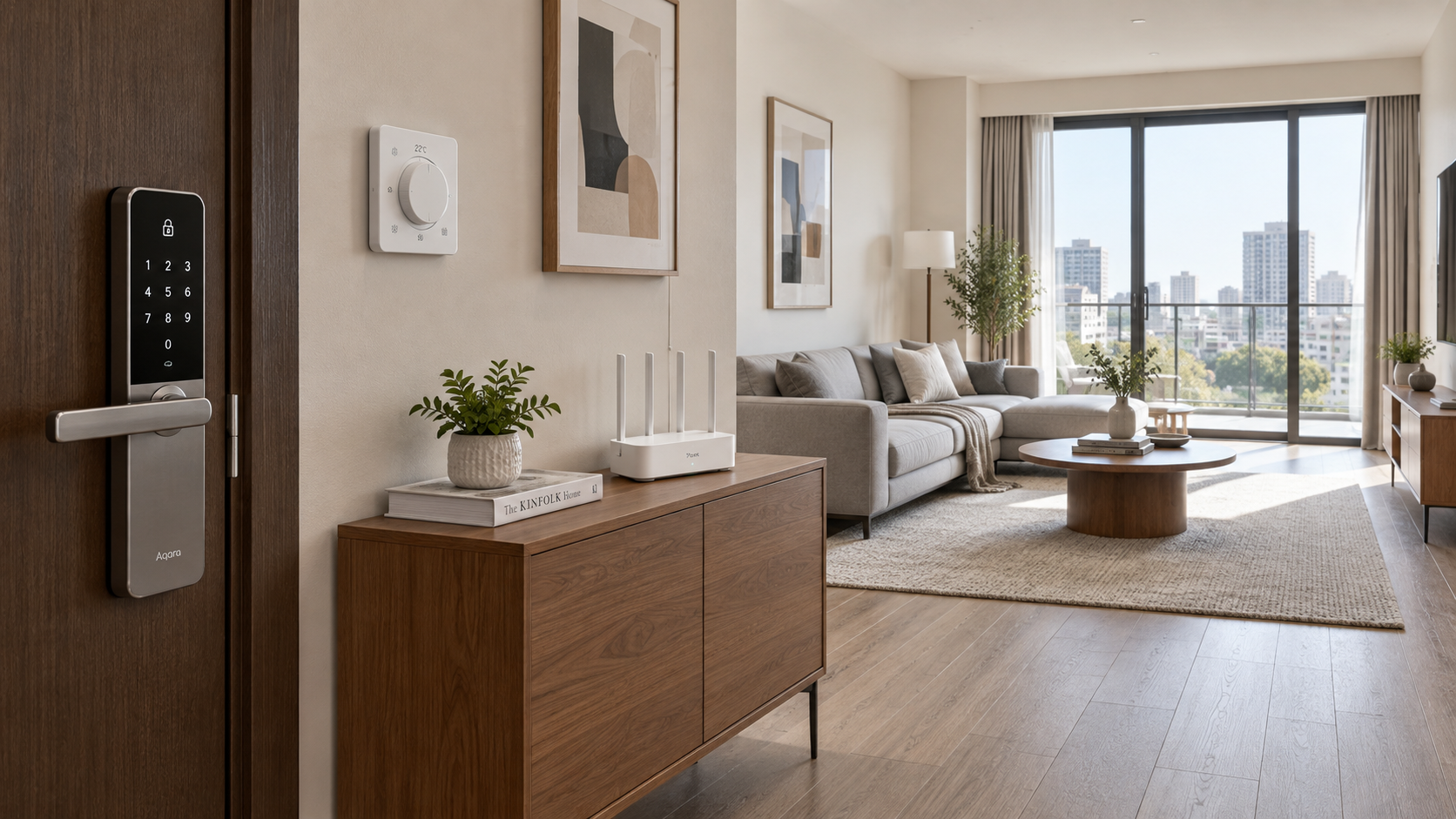
The smart space features that matter most to tenants usually deliver four benefits: dependable access, reliable connectivity, manageable utility costs, and control over their surroundings.
For property owners, developers, and building professionals, these priorities provide a practical starting point. Technology earns its place when it removes friction from everyday occupancy.
Smart locks, responsive climate controls, and leak detection can support that goal. Their value depends on installation quality, operating policies, maintenance, and clear tenant communication.
This article focuses primarily on residential rentals, with relevant distinctions for commercial spaces. The recommended priorities are a decision framework, rather than a universal survey ranking.
Which Features Deserve Priority in a Tenant-Focused Building?
Start with the problems tenants experience most frequently. Difficulty entering the building, unstable internet, uncomfortable rooms, unexpected bills, and unresolved maintenance issues deserve attention first.
A useful starting order is reliable connectivity and secure access, followed by controllable heating and cooling, responsive maintenance, and protection against water damage or waste.
Privacy and accessibility belong across every category. They determine whether tenants can confidently use a feature, including those without smartphones or with specific accessibility needs.
This order should change with the property. In a hot climate, cooling reliability may dominate; in a building with recurring deliveries, package access becomes more important.
Separate tenant priorities from asset protection. A concealed leak sensor may protect both interests, while an elaborate lobby display may offer little measurable everyday benefit.
Before selecting equipment, review maintenance requests, complaints, utility arrangements, and leasing feedback. Ask existing tenants which recurring inconvenience they would most like the building to resolve.
Define what improvement means before procurement. Examples include fewer lockouts, better bedroom temperature control, faster leak response, or fewer connectivity complaints during busy evening hours.
Features with visible tenant benefits and manageable operating requirements deserve early consideration. Features dependent on uncertain adoption or substantial subscription costs need a stronger business case.
Can Tenants Enter Safely Without Depending on a Phone?
Smart access can simplify daily routines by replacing physical key exchanges with managed credentials. It can also support temporary access for visitors and approved service providers.
Tenants benefit when entry works consistently at the building entrance, shared amenities, and their own door. A disconnected experience creates confusion and increases support requests.
Reliability matters more than the credential format. Evaluate what happens during power failures, network outages, depleted batteries, lost phones, and interruptions to the access service.
Provide an appropriate alternative, such as a physical key, accessible fob, or another supported entry method. Emergency access procedures should be clear to staff and occupants.
Temporary credentials should expire automatically and follow permissions appropriate to the visit. Tenants should understand who can authorize entry and how that authorization is withdrawn.
Installation must preserve applicable fire, egress, and accessibility requirements. Product compatibility with existing doors and hardware needs verification before a building-wide commitment is made to deployment.
Package systems deserve priority where missed deliveries or unsecured parcels create frequent complaints. Secure storage, simple collection, accessible compartments, and prompt notifications determine practical usefulness.
Measure access performance through lockouts, failed entries, support tickets, and tenant feedback. A feature that repeatedly requires assistance is unlikely to improve the overall experience.
Will Connectivity Work Where Tenants Actually Need It?
Reliable internet supports remote work, education, entertainment, and connected devices. For many households, poor connectivity becomes an immediate daily problem regardless of other smart amenities.
Assess service inside apartments and across relevant shared spaces. Building materials, floor layouts, equipment placement, and congestion can make advertised connection speeds misleading in practice.
Where residents arrange their own broadband, usable cabling, service availability, and straightforward installation may matter more than including building-wide Wi-Fi as part of the lease.
If internet is bundled, explain charges, performance expectations, support responsibilities, and available alternatives. Tenants need clarity about whom to contact when the connection stops working.
Separate tenant internet access from building management systems and sensitive operational devices. Network design should limit the effects of faults or compromised equipment across different systems.
For commercial tenants, assess capacity during working hours, meeting-room coverage, and requirements for business-specific networks. Office connectivity needs often differ substantially from residential usage patterns.
Validate performance under realistic occupancy conditions. A demonstration in an empty building cannot establish how consistently the network will serve tenants once usage increases significantly.
Do Climate Controls Improve Comfort and Reduce Avoidable Costs?
Smart thermostats are valuable when tenants can easily set comfortable temperatures, understand schedules, and avoid conditioning empty rooms unnecessarily. Controls should remain usable without an app.
However, a thermostat cannot compensate for poorly balanced ventilation, inadequate insulation, or failing equipment. Investigate underlying building performance before treating smart controls as the solution.
Room sensors and zoning may help where bedrooms and living areas experience different temperatures. Their usefulness depends on whether the mechanical system can respond appropriately.
Give tenants clear control within the system’s safe operating limits. Automation that repeatedly overrides reasonable preferences can create frustration, complaints, and attempts to disable equipment.
Explain energy-saving settings in everyday language. Residents should understand how schedules work, what changes automatically, and how to restore their preferred settings when routines change.
Utility responsibility affects perceived value. Tenants paying their own heating or cooling bills may prioritize cost visibility more strongly than residents whose rent includes utilities.
Show usage information that supports decisions, rather than presenting unexplained numbers. Comparisons should account for weather, occupancy, and billing periods before suggesting that consumption has improved.
Lighting controls are useful in suitable shared areas, particularly when occupancy varies. Detection settings must avoid leaving people in darkness or creating uncomfortable repeated switching.
Evaluate comfort complaints alongside energy performance. Savings achieved through unwanted temperature restrictions can undermine tenant satisfaction, even when the owner’s operating costs decline over time.
Which Kitchen and Bathroom Features Solve Real Problems?
In kitchens and bathrooms, dependable fixtures and appliances generally deliver more value than extensive app connectivity. Tenants notice reliable hot water, effective ventilation, and straightforward operation.
Water-efficient fixtures can reduce consumption, but selection must preserve acceptable performance. Low-flow fittings that produce frustrating showers or ineffective rinsing may encourage modifications and complaints.
Check local water pressure, temperature stability, and compatibility with existing plumbing. A product’s rated efficiency alone does not establish how well it will perform onsite.
Leak sensors are particularly useful near water heaters, washing machines, dishwashers, and vulnerable pipework. Their value depends on whether someone receives and acts on alerts.
An automatic shutoff system requires careful design, suitable placement, and a defined response process. Owners should assess false alarms, reset procedures, and effects on occupants.
Tenant-facing instructions should explain what happens after a leak alert and whom to contact. Technology offers limited protection when responsibilities remain unclear during an incident.
Connected appliances deserve investment when remote diagnostics or maintenance notifications improve service. Extra screens and applications may add little value if basic performance remains unchanged.
GIAM’s materials and sanitary-space perspective reinforces a practical principle: durable finishes, accessible components, and serviceable plumbing should support the technology throughout the property’s operating life.
Will Tenants Trust the System and Know How to Use It?
Privacy can influence acceptance as strongly as convenience. Tenants need a clear explanation of what information is collected, why it is needed, and who can access it.
Access logs, occupancy signals, device usage, and maintenance records can reveal personal routines. Collect only information necessary for defined services and establish appropriate retention periods.
Distinguish sensors used for building operations from surveillance equipment. Camera placement, recording practices, and access permissions require clear policies consistent with applicable legal requirements locally.
Explain whether landlords or service providers can adjust settings remotely. Any access to occupied homes should follow the lease, applicable law, and clearly communicated procedures.
Optional services should have understandable choices where feasible. Tenants should know whether declining an app or feature affects their ability to use essential building services.
Simple onboarding improves adoption. Provide concise instructions, demonstrate essential functions at move-in, and offer help through channels residents can use without navigating another unfamiliar application.
Prefer systems with documented security maintenance, supported updates, and clear procedures for removing former occupants’ access. These requirements should extend to contractors and management staff.
At move-out, revoke credentials and follow the established process for account and data handling. Reliable turnover procedures protect incoming tenants and reduce avoidable administrative mistakes.
How Should Owners Judge Cost, Value, and Long-Term Support?
Assess the total cost over the expected service life. Include installation, integration, subscriptions, batteries, connectivity, training, replacement parts, support, and eventual migration to another provider.
Estimate benefits separately for tenants and owners. Reduced maintenance visits, faster incident response, and lower consumption may create value even without a demonstrable rent premium.
Avoid assuming that adding smart features automatically raises rents or improves retention. Test those expectations against local competition, tenant feedback, and comparable property performance data.
Confirm who receives each financial benefit. If tenants pay utilities while owners fund upgrades, the investment case may rely partly on satisfaction and market positioning.
Ask vendors about interoperability, data export, subscription changes, and continued operation if the service ends. Proprietary dependencies can make later replacements more expensive or disruptive.
Run a limited pilot before committing across the portfolio. Include varied unit types and residents, then observe performance through ordinary routines and likely failure scenarios.
Agree on success measures beforehand: entry failures, comfort complaints, response times, maintenance workload, adoption, and attributable operating costs. Use comparable baseline information wherever it is available.
Assign operational ownership before launch. Staff need time, training, and authority to handle alerts, replace components, update permissions, and resolve problems within clear service expectations.
Scale the features that demonstrate practical benefits and remain supportable. Reconsider features with low adoption, persistent failures, unclear tenant value, or costs exceeding credible benefits.
Choose Features Tenants Can Depend On Every Day
Which smart space features matter most to tenants? Begin with reliable access, connectivity, and comfortable living conditions, then address water risks, maintenance responsiveness, and everyday convenience.
The right combination varies by building, household needs, local conditions, and utility arrangements. Tenant feedback and operating evidence should shape priorities more than product demonstrations.
For owners and developers, the strongest investment case connects a specific tenant problem with a dependable service, measurable improvement, and a realistic long-term support plan.
A successful smart space makes ordinary life easier. Choose systems tenants can understand, control, and trust, backed by building fundamentals that perform consistently over time.