Architectural material trends shifting hotel renovation plans
Architectural material trends are reshaping hotel renovation strategies as operators balance guest expectations, compliance pressures, and long-term asset value. For enterprise decision-makers, understanding how sustainable surfaces, water-saving systems, and smart space solutions influence renovation planning is now essential. This article explores the forces behind these shifts and what they mean for investment priorities, competitive positioning, and future-ready hospitality projects.
Why architectural material trends now drive hotel renovation decisions
Hotel renovation used to focus heavily on appearance, brand refresh, and room-rate uplift. Today, architectural material trends influence a much wider set of decisions, including compliance risk, maintenance cycles, water efficiency, indoor hygiene, supply chain resilience, and digital guest experience.
For enterprise decision-makers, that shift matters because renovation budgets are no longer judged only by visual impact. Capital teams, procurement leaders, owners, and operators increasingly ask whether selected materials can reduce lifecycle cost, support sustainability targets, and protect asset performance over ten to fifteen years.
In this environment, architectural material trends are not a design-side topic alone. They sit at the intersection of investment planning, engineering standards, guest satisfaction, and operational continuity. Hotels that overlook this shift often face cost overruns, premature replacement, or difficulty meeting modern expectations for health, efficiency, and smart control.
- Rising utility costs are pushing stronger interest in water-saving fixtures, energy-conscious surfaces, and low-maintenance assemblies.
- Health-sensitive travel demand is increasing the importance of anti-bacterial materials, easy-clean finishes, and better sanitary space planning.
- Brand competition is rewarding hotels that combine durable construction materials with elevated interior aesthetics and smart in-room functionality.
- Trade tariffs and regional building standards are making procurement timing and specification discipline more critical than before.
GIAM helps decision-makers interpret these changes through a practical intelligence lens. Its Strategic Intelligence Center tracks material science developments, water-related design shifts, smart kitchen and bath systems, and changes in global standards that can directly affect renovation planning.
Which architectural material trends are changing hotel projects the most?
Not every new product trend deserves budget allocation. The most relevant architectural material trends for hotels are those that improve durability, reduce operating cost, simplify cleaning, or strengthen guest perception without creating excessive retrofit complexity.
High-priority material shifts
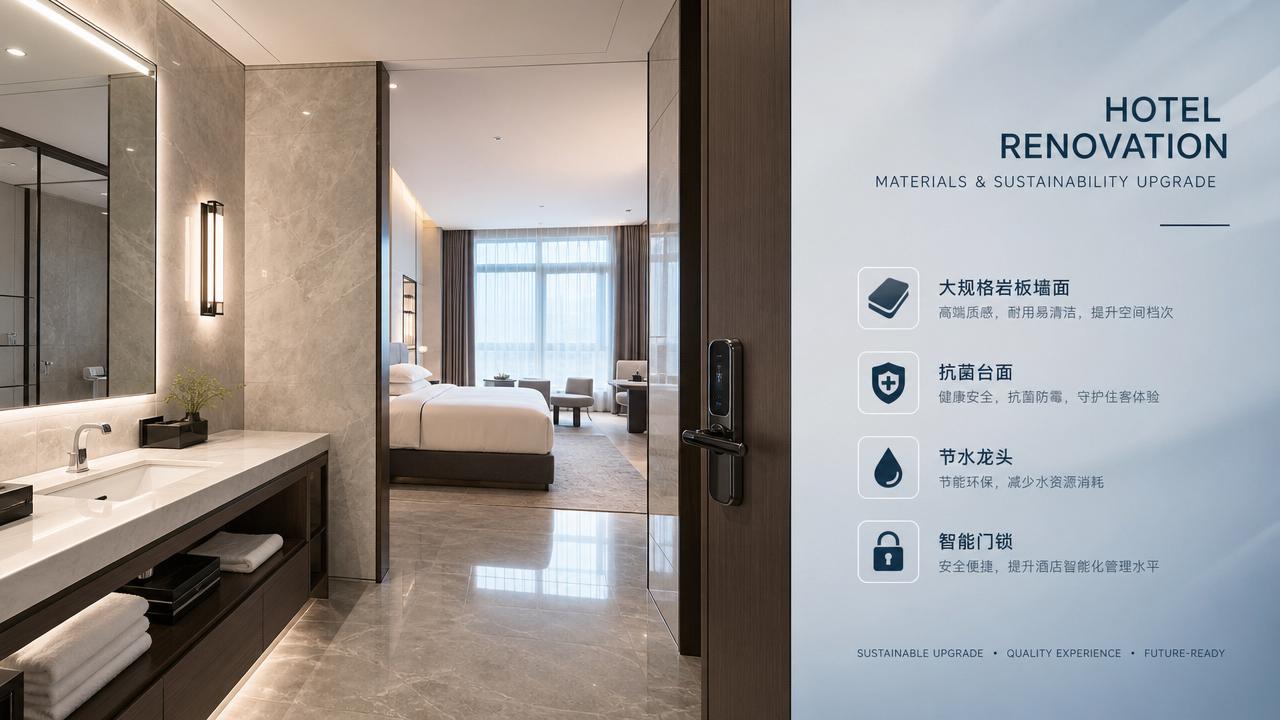
- Porcelain and sintered surfaces are increasingly used in wet areas and vanity zones because they offer strong stain resistance, visual consistency, and lower maintenance than some natural materials.
- Anti-bacterial finishes are gaining attention in guestrooms, bathrooms, and shared touchpoints where hygiene perception affects reviews and repeat bookings.
- Water-saving sanitary systems are becoming specification priorities as operators target utility savings and local regulatory compliance.
- Smart locks, sensor-based controls, and connected bath or kitchen systems are moving from luxury differentiators to operational tools.
- Low-emission materials are being evaluated more carefully in renovations where indoor air quality and guest comfort influence brand reputation.
The table below summarizes how leading architectural material trends typically affect hotel renovation planning across operational, financial, and guest-facing dimensions.
The common pattern is clear: current architectural material trends create value when specification decisions are linked to operational evidence, not just showroom appeal. Hotels that test products against real cleaning, water use, and occupancy conditions make stronger renovation choices.
How should decision-makers evaluate materials by hotel zone?
A successful renovation rarely uses one specification logic across the entire property. Guestrooms, bathrooms, lobbies, food service areas, and back-of-house spaces face different traffic patterns, cleaning demands, moisture exposure, and brand visibility. That is why architectural material trends should be assessed zone by zone.
Guestroom and corridor priorities
In guestrooms and corridors, the most important metrics are acoustic comfort, wear resistance, repair convenience, and aesthetic longevity. Materials that look premium on opening day but show edge damage or staining after heavy luggage traffic can erode return on investment quickly.
Bathroom and sanitary space priorities
Bathrooms are where many architectural material trends produce the clearest measurable gains. Water-saving fixtures, anti-bacterial surfaces, slip-resistant flooring, and durable wall systems can reduce complaints, housekeeping time, and long-term maintenance intervention.
Public and service area priorities
Lobbies, lounges, restaurants, and service corridors require a different balance. Decision-makers must compare visual impact with replacement difficulty, cleaning frequency, and supply availability. In these areas, material standardization across multiple properties can also improve procurement leverage.
The following table provides a practical zone-based selection view for architectural material trends in hotel renovation plans.
This zone-based view helps owners and operators avoid a common mistake: overinvesting in visual upgrades in low-impact areas while underinvesting in systems and materials that shape guest comfort and operating efficiency every day.
What procurement teams should compare before approving specifications
Procurement leaders often face conflicting pressure. Design teams want aesthetic flexibility. Engineering teams want proven performance. Finance wants cost control. Operations wants fast installation and fewer callbacks. Architectural material trends only create value when these priorities are translated into a disciplined approval framework.
Core evaluation dimensions
- Lifecycle cost rather than purchase price alone. A lower-cost finish that fails in three years may be more expensive than a premium option with longer service intervals.
- Installation complexity. Some advanced surfaces and smart components require higher installer skill or more coordination between trades.
- Supply continuity. Regional logistics, tariff changes, and lead-time volatility can disrupt phased hotel renovation schedules.
- Operational compatibility. Cleaning methods, spare part access, and integration with existing systems should be tested early.
- Compliance fit. Water-use requirements, fire considerations, sanitation rules, and indoor environmental expectations vary across markets.
GIAM’s market scanning and evolutionary trend analysis are especially useful here because they connect material selection to broader market signals. That includes shifts in global energy-saving standards, tariff movement, and demand patterns for premium materials and smart kitchen and bath systems.
Cost, alternatives, and the hidden economics of architectural material trends
One reason hotel renovation plans stall is that teams compare options too narrowly. They may compare tile against tile or fixture against fixture without examining cleaning labor, guest disruption, replacement cycles, or inventory complexity. Architectural material trends should be assessed through total ownership economics.
For example, a water-saving shower system may cost more upfront than a conventional unit. Yet if it lowers water consumption, reduces hot-water demand, and still preserves guest comfort, the medium-term payback can be attractive. Similarly, higher-density surfaces can reduce breakage and replacement frequency in high-use hospitality environments.
- Premium materials may be justified in wet zones, front-of-house areas, and branded signature spaces where failure is highly visible.
- Mid-tier alternatives can work in secondary corridors or low-visibility areas if maintenance performance is validated.
- Standardized material families across multiple properties often improve spare stock planning and vendor negotiation strength.
The hidden cost of poor specification is often not the material invoice. It is room downtime, emergency repair, brand inconsistency, and compressed renovation sequencing caused by delayed approvals or unavailable substitutes.
Compliance, standards, and risk control in hotel renovation
As architectural material trends evolve, compliance review becomes more complex. Decision-makers should confirm that material claims, water-efficiency performance, safety properties, and installation requirements align with the destination market and project scope. This is especially important in international hotel portfolios where one specification may not transfer cleanly across jurisdictions.
Key areas to verify
- Water-efficiency requirements for sanitary fixtures and related plumbing performance expectations.
- Surface suitability for wet, high-traffic, or hygiene-sensitive environments.
- Indoor environmental considerations, including emissions-related project expectations where relevant.
- Documentation quality for warranty terms, maintenance procedures, and approved installation methods.
GIAM’s intelligence-driven approach is valuable because it helps bridge technical language and commercial implications. Material science architects, hydraulic design experts, and industrial economists each see different risks. Bringing these viewpoints together can prevent expensive late-stage specification revisions.
Common mistakes enterprises make when following architectural material trends
Many renovation teams adopt architectural material trends too late, too early, or too superficially. The result is often a project that looks current but underperforms financially or operationally.
Frequent missteps
- Approving materials based on mock-up appearance without testing them against cleaning chemicals, moisture, slip risk, or guest turnover intensity.
- Selecting smart systems without confirming integration with access control, property management workflows, or maintenance capacity.
- Assuming sustainability claims automatically translate into cost savings without reviewing usage patterns and local utility structures.
- Overlooking tariff exposure, regional supply concentration, or replacement-part access during long renovation programs.
A practical response is to treat architectural material trends as decision inputs, not decisions by themselves. Trend awareness should lead to testing, comparison, phased rollout, and measurable performance targets.
FAQ: practical questions enterprise buyers ask
How do architectural material trends affect renovation ROI?
They affect ROI through maintenance frequency, guest satisfaction, utility consumption, and replacement timing. The strongest ROI usually comes from materials that combine visible quality with measurable operating benefits, especially in bathrooms, high-traffic public spaces, and digitally managed guestroom systems.
Which hotel projects should prioritize water-saving systems first?
Properties with high occupancy, rising utility costs, aging plumbing fixtures, or sustainability reporting obligations should review these systems early. However, user comfort and hydraulic compatibility must be checked before approval, because poor flow experience can harm guest perception.
Are anti-bacterial materials always worth the premium?
Not always. They are often most valuable in guest bathrooms, wellness areas, healthcare-adjacent hospitality formats, and high-touch public spaces. Buyers should verify cleaning protocols, durability, and realistic benefit in the intended environment rather than paying for a claim that will not materially influence operations.
What should procurement ask suppliers before locking a specification?
Ask about lead time stability, approved installation methods, spare-part continuity, maintenance instructions, relevant compliance documentation, and substitution strategy if a shipment is delayed. These issues often matter more than minor differences in quoted unit price.
Why informed market intelligence matters before you renovate
Hotel renovation is now shaped by a mix of material innovation, sustainability pressure, water efficiency, and smart-space expectations. Architectural material trends are no longer side notes for design teams. They are board-level considerations because they influence asset value, competitive differentiation, and operational resilience.
GIAM is built for this decision environment. Through its Strategic Intelligence Center, decision-makers can track how anti-bacterial materials, water-saving technologies, smart locks, premium building materials, and smart kitchen and bath systems are evolving across global markets. That matters when your team needs more than inspiration. It needs actionable intelligence.
Why choose us for material intelligence and renovation planning support
If your organization is reviewing hotel renovation priorities, GIAM can support the questions that directly affect investment and procurement decisions. We help enterprise teams examine architectural material trends through the lens of market movement, technical relevance, and commercial impact.
- Parameter confirmation for core building materials, sanitary systems, and smart kitchen and bath components.
- Product selection support based on usage scenario, maintenance expectations, and project positioning.
- Delivery cycle discussion to reduce procurement risk during phased renovation programs.
- Custom solution review for green materials, water-saving technologies, and smart space integration.
- Certification and compliance guidance for cross-market projects with varying standards and documentation needs.
- Sample support and quotation communication for teams comparing alternatives before final specification.
If you need to evaluate which architectural material trends are commercially relevant for your next hotel renovation, contact GIAM to discuss specification options, compliance checkpoints, delivery timing, and scenario-based material selection. Clearer decisions at the planning stage usually prevent the most expensive problems later.
Industry Briefing
Get the top 5 industry headlines delivered to your inbox every morning.