Residential material trends that may cut upkeep costs
Residential Material Trends That May Cut Upkeep Costs
For homeowners, choosing finishes is no longer just about style—it is also about long-term savings, durability, and easier daily living.
Today’s residential material trends point toward surfaces, fixtures, and systems designed to resist stains, moisture, bacteria, and wear.
From low-maintenance flooring to water-saving bathroom solutions, these innovations can reduce repair cycles without sacrificing comfort or design appeal.
Why Residential Material Trends Are Moving Toward Lower Upkeep
The housing market is facing higher labor costs, tighter energy expectations, and stronger demand for healthier indoor spaces.
These pressures are reshaping residential material trends across kitchens, bathrooms, walls, floors, and smart home infrastructure.
Materials that once competed mainly on color or texture now compete on lifecycle value, cleanability, and resistance to everyday damage.
GIAM observes that residential material trends increasingly connect construction performance with interior aesthetics and intelligent living standards.
This shift is practical. A beautiful surface loses value quickly if it needs frequent resealing, repainting, or replacement.
Low-upkeep homes now depend on smarter material selection at the design stage, not only on better maintenance routines later.
Key Signals Behind Residential Material Trends
Several visible signals show why residential material trends are becoming more performance-led and cost-aware.
These signals are not isolated. They reflect how residential material trends are responding to lifestyle, regulation, and maintenance economics together.
Flooring Is Becoming a Major Upkeep Cost Lever
Flooring often carries the highest daily abrasion, making it central to residential material trends focused on durability.
Luxury vinyl tile, porcelain tile, engineered stone, and improved laminates are gaining attention for practical reasons.
They can resist water, pet damage, stains, and heavy foot traffic better than many traditional finishes.
The most useful residential material trends in flooring are not just about harder surfaces.
They also involve easier installation, replaceable sections, stable cores, and surfaces that clean well with mild products.
- Rigid-core flooring can reduce movement, gaps, and moisture-related deformation.
- Porcelain tile offers long service life in kitchens, entries, and bathrooms.
- Textured slip-resistant surfaces reduce safety risks without demanding complex cleaning.
- Modular flooring allows partial replacement instead of full-room renovation.
For long-term value, flooring should be judged by traffic level, moisture exposure, cleaning time, and replacement difficulty.
Kitchen Surfaces Are Shifting From Luxury Looks to Resilience
Kitchen design remains style-driven, but residential material trends show stronger demand for practical resilience.
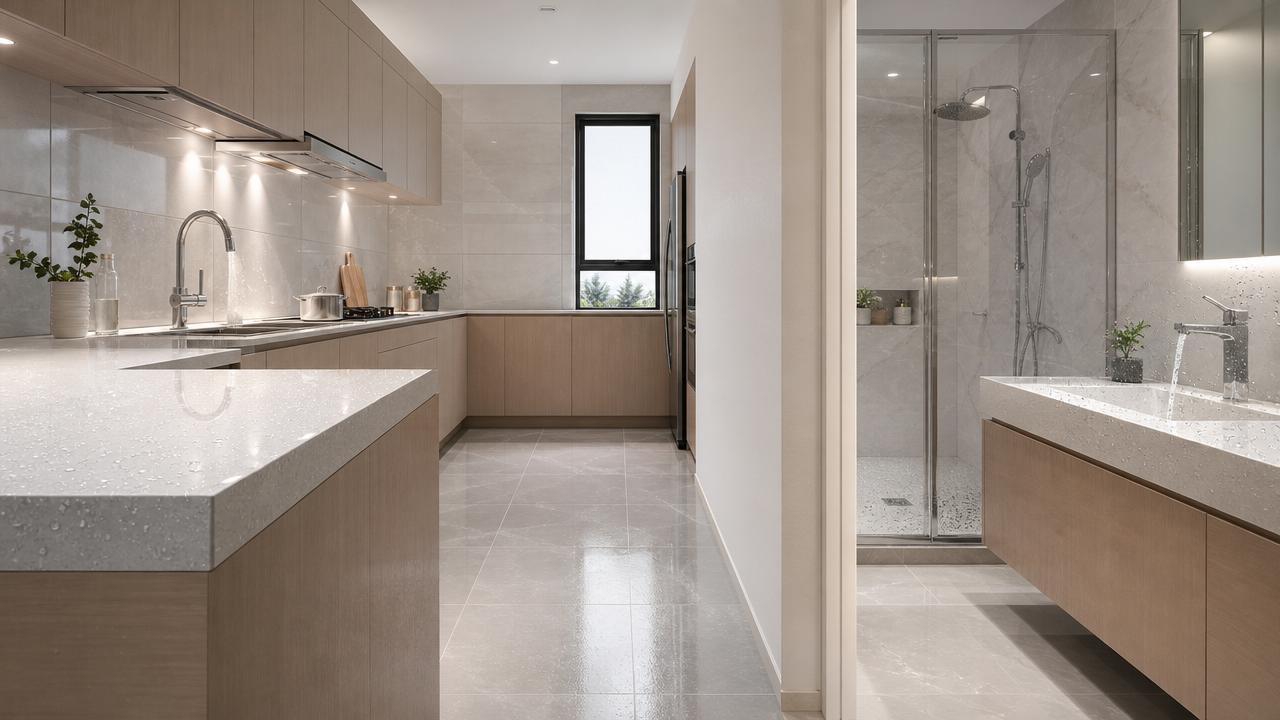
Countertops, backsplashes, cabinet finishes, and sinks now need to withstand heat, oil, impact, and repeated wiping.
Quartz surfaces, sintered stone, compact laminates, and ceramic slabs are popular because they reduce daily maintenance friction.
Compared with porous stone, many engineered surfaces need less sealing and offer more predictable stain resistance.
This explains why residential material trends increasingly favor dense, non-porous kitchen materials with stable color and easy cleaning.
Cabinet and hardware choices also affect lifecycle cost
Cabinet panels with anti-fingerprint coatings can reduce visible smudges and cleaning frequency.
Soft-close hinges, corrosion-resistant hardware, and moisture-stable boards help avoid early functional failure.
These details may look secondary, yet they often determine whether a kitchen ages gracefully.
Bathrooms Are Driving Waterproof and Hygienic Material Innovation
Bathrooms reveal the strongest connection between residential material trends, hygiene, and maintenance cost control.
Constant moisture can damage walls, floors, vanities, sealants, grout, and plumbing-adjacent structures.
That is why waterproof boards, larger-format tiles, improved grout, and molded shower systems are gaining relevance.
Fewer joints can mean fewer places for grime, mold, and cracking to develop.
Water-saving faucets, dual-flush toilets, and smart leak sensors also support upkeep reduction.
They reduce water waste, detect hidden issues earlier, and help prevent expensive structural repairs.
- Choose low-porosity tiles for wet zones and high-splash areas.
- Use mold-resistant sealants where movement and moisture are expected.
- Specify accessible plumbing components for simpler future service.
- Pair water-efficient fixtures with reliable pressure and drainage design.
In GIAM’s intelligence view, sanitary spaces are becoming test grounds for durable, hygienic, and water-conscious residential material trends.
Walls, Paints, and Coatings Are Becoming Smarter
Walls influence both maintenance effort and indoor comfort, especially in homes with children, pets, or high humidity.
Washable paints, low-VOC coatings, mineral-based finishes, and anti-microbial formulations are reshaping residential material trends.
These materials can reduce repainting cycles, improve indoor air quality, and simplify spot cleaning.
In high-contact areas, scrubbable coatings often deliver better value than delicate matte finishes.
Behind the surface, moisture-resistant boards and proper vapor management remain equally important.
A premium coating cannot compensate for poor substrate choice or hidden condensation problems.
Smart Systems Are Changing the Meaning of Low Maintenance
Residential material trends are expanding beyond physical surfaces into sensors, locks, valves, and connected kitchen and bath systems.
Smart leak detection can shut off water before a small pipe issue becomes a flooring disaster.
Smart ventilation can reduce humidity peaks that contribute to mold, odor, and finish deterioration.
Smart locks and durable door hardware also reduce mechanical wear when designed for frequent use.
The best residential material trends now combine material science with digital monitoring and preventive maintenance.
This is especially relevant for multi-unit housing, rental properties, and compact urban homes.
What These Trends Mean Across the Home Value Chain
The impact of residential material trends differs by space, budget, and building type.
However, the direction is consistent: better upfront specification can reduce lifetime service needs.
These changes also affect project planning, product comparison, and after-sale service expectations.
Warranty clarity, cleaning instructions, and compatibility between materials are becoming more important decision factors.
Decision Points Worth Watching Before Choosing Materials
Not every durable-looking material delivers lower upkeep. Some require special cleaners, expert installation, or climate-specific detailing.
A practical assessment should connect appearance with maintenance reality, installation risk, and replacement cost.
- Check whether the surface needs sealing, waxing, polishing, or special cleaning products.
- Review moisture tolerance for kitchens, bathrooms, basements, and laundry areas.
- Compare repairability, not only initial durability claims.
- Ask whether components can be replaced without major demolition.
- Consider energy, water, and hygiene performance alongside visual appeal.
Residential material trends should be translated into room-by-room priorities rather than followed as decoration fashions.
A Practical Response Framework for Lower-Upkeep Homes
The smartest response is to rank materials by exposure, failure risk, and maintenance burden.
This framework makes residential material trends easier to apply in real projects with different budgets.
It also avoids overspending on premium finishes in areas where exposure is low.
The Next Phase of Residential Material Trends
The next phase will likely combine carbon reduction, hygienic performance, and smart monitoring more tightly.
Materials will be judged by embodied impact, service life, cleaning chemistry, and adaptability to changing household needs.
GIAM expects more demand for verified performance data, transparent standards, and cross-border intelligence on building material innovation.
Residential material trends will continue rewarding products that protect comfort while reducing maintenance uncertainty.
The strongest choices will not always be the most expensive. They will be the most suitable for exposure and use.
Action Steps for Smarter Material Decisions
Start with the rooms that create the highest repair risk: bathrooms, kitchens, entries, and utility areas.
Then compare materials by cleaning effort, moisture performance, repairability, warranty terms, and expected service life.
Use residential material trends as a decision lens, not as a shortcut.
For deeper market intelligence, track GIAM’s insights on green materials, smart spaces, sanitary systems, and kitchen-bath innovation.
The goal is clear: build homes that look refined, perform reliably, and cost less to care for over time.
Industry Briefing
Get the top 5 industry headlines delivered to your inbox every morning.