What construction industry trends matter most in 2026?
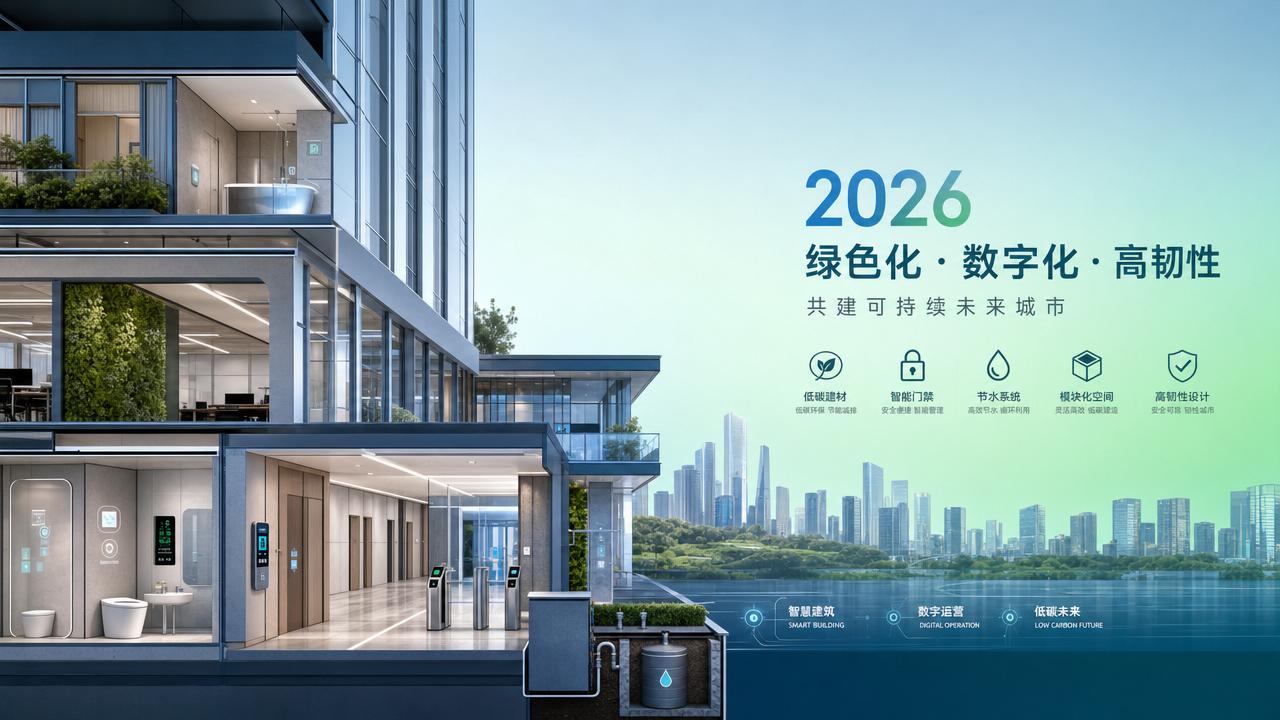
As 2026 approaches, construction industry trends are shifting from basic cost control toward smarter, greener, and more resilient building choices.
Low-carbon materials, water-saving systems, digital supply chains, and intelligent interiors now shape how projects are planned, approved, built, and upgraded.
For global building intelligence platforms such as GIAM, these changes matter because they connect material performance, spatial design, compliance pressure, and market demand.
Understanding which construction industry trends matter most in 2026 helps reveal where value will move across residential, commercial, and mixed-use environments.
Why construction industry trends must be judged by scenario, not hype
Not every trend affects every project equally. A high-rise apartment tower faces different pressures than a hospital renovation or a smart retail fit-out.
That is why the most useful way to read construction industry trends is through real application scenarios and decision conditions.
In 2026, five forces will shape most building decisions: carbon regulation, water efficiency, supply chain visibility, health performance, and digital intelligence.
Their influence varies by building type, occupancy pattern, climate risk, and the lifecycle goals of the space.
Scenario 1: Urban residential projects where low-carbon and smart living must work together
In dense urban housing, the leading construction industry trends are no longer separate from interior expectations.
Buyers and tenants increasingly expect healthy surfaces, efficient fixtures, connected access control, and lower utility costs in one integrated package.
This makes material selection more strategic. Products must balance embodied carbon, durability, antimicrobial properties, and visual appeal.
Water-saving faucets, leak detection, and smart bathroom systems are especially relevant where urban utility costs keep rising.
Core judgment points in residential settings
- Whether green materials meet performance and price targets.
- Whether smart systems reduce operating costs without adding maintenance complexity.
- Whether interior finishes support health, longevity, and easy cleaning.
- Whether supply sources remain stable under tariff and logistics pressure.
Scenario 2: Commercial spaces where flexibility and data-led upgrades matter most
Office, hospitality, and retail environments are being redesigned around adaptability. This is one of the most practical construction industry trends for 2026.
Commercial projects now need interiors that can be refreshed quickly, maintained efficiently, and adjusted for changing occupancy patterns.
Modular partitions, easy-replacement surfaces, sensor-based water systems, and connected access technologies become more valuable in this context.
The best commercial strategies combine construction speed with lifecycle intelligence, not just lower upfront spending.
Key signals in commercial decision-making
Look for solutions that support rapid turnover, energy and water savings, occupant comfort, and easier compliance reporting.
In this scenario, digital twins and connected facility data can influence material and system choices before installation begins.
Scenario 3: Public and healthcare spaces where safety and sanitation lead trend impact
Few construction industry trends are more important in healthcare and public facilities than hygiene-driven specification.
Antibacterial surfaces, touch-reduced fixtures, durable wet-area materials, and efficient plumbing systems are gaining stronger priority.
These environments also face stricter operational requirements. A visually attractive product is not enough if it fails under heavy cleaning cycles.
As a result, future-ready design in public buildings often begins with performance evidence, certification pathways, and maintenance realism.
Core judgment points in sanitation-focused spaces
- Resistance to moisture, chemicals, and heavy daily use.
- Ease of cleaning and reduction of contact points.
- Verified compliance with health and safety standards.
- Long-term water efficiency without service disruption.
Scenario 4: Mixed-use developments where supply chain risk changes specification choices
Another major shift in construction industry trends is the move from simple sourcing to strategic procurement visibility.
Mixed-use projects often combine residential, hospitality, and retail functions, which increases complexity across materials and delivery schedules.
In 2026, tariff changes, regional regulation, and logistics volatility can directly affect what gets specified and when substitutions become necessary.
This is why digital supply chain mapping and earlier product validation are becoming core project controls, not optional extras.
What to watch in complex developments
Projects need alternatives that preserve design intent while protecting cost, compliance, and installation timing.
Reliable market intelligence on premium materials, sanitary systems, and smart interior components can reduce redesign pressure later.
How construction industry trends differ across major building scenarios
Practical ways to adapt to 2026 construction industry trends
The best response to construction industry trends is not chasing every innovation. It is building a clearer framework for scenario-based decisions.
- Rank materials by carbon impact, water performance, durability, and compliance value.
- Check whether smart features produce measurable operational benefits.
- Create approved substitute paths before procurement pressure appears.
- Use market intelligence to compare regional demand and tariff exposure.
- Review interior systems as part of whole-building performance, not decoration alone.
This approach aligns well with GIAM’s intelligence model, where building materials, sanitary systems, and smart spatial products are evaluated together.
Common mistakes when reading construction industry trends for 2026
One frequent mistake is treating sustainability as a branding layer instead of a specification requirement shaped by regulation and financing expectations.
Another mistake is assuming digital construction means only BIM adoption. In reality, data value also comes from sourcing visibility and post-occupancy performance.
Many teams also underestimate the connection between interiors and infrastructure. Kitchens, bathrooms, locks, surfaces, and water systems now influence asset competitiveness.
Finally, some overlook how fast premium demand is changing in urban markets. Better materials and smart systems can become baseline expectations quickly.
What matters most next
The most important construction industry trends in 2026 are the ones that change real project outcomes across specific scenarios.
Low-carbon materials, efficient water systems, health-focused surfaces, intelligent access, and transparent supply chains are no longer isolated themes.
They are becoming a connected framework for better residential living, stronger commercial performance, and safer public spaces.
To move forward effectively, compare trends by scenario, validate performance early, and track how regulation and urban demand reshape material priorities.
That next step turns broad construction industry trends into actionable intelligence and a clearer competitive path for 2026 and beyond.
Industry Briefing
Get the top 5 industry headlines delivered to your inbox every morning.