What smart spaces technology solves in daily operations
From facility teams to frontline operators, daily work often slows down because of disconnected systems, delayed alerts, and inefficient space management. Smart spaces technology addresses these gaps by linking sensors, software, assets, and workflows in real time. Across offices, retail sites, hospitality venues, healthcare settings, and residential buildings, it helps turn reactive operations into coordinated action. For organizations tracking performance, comfort, safety, and energy, smart spaces technology is becoming a practical operating layer rather than a future concept.
What is smart spaces technology in daily operations?
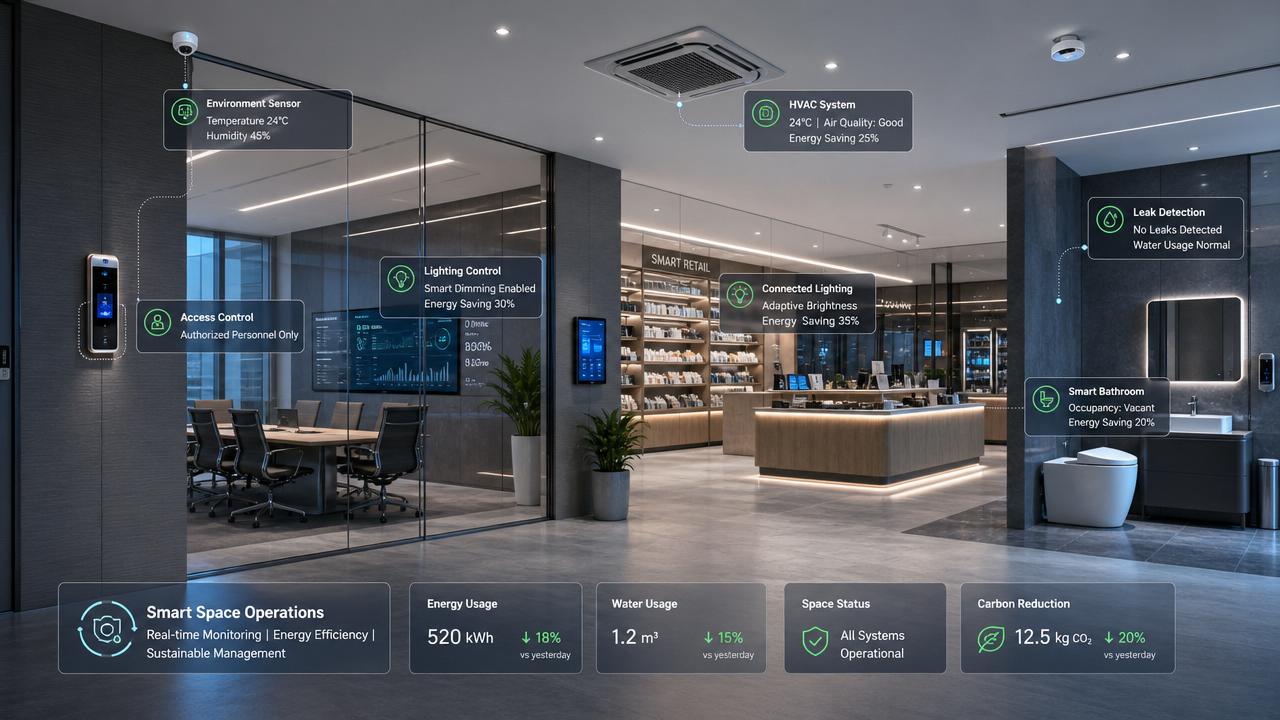
Smart spaces technology combines connected devices, occupancy data, automation tools, and analytics to improve how physical spaces work every day.
It usually connects building systems such as lighting, HVAC, access control, water monitoring, asset tracking, and service platforms.
The main value is simple. It reduces manual checks, speeds up response time, and supports better decisions with live information.
In practice, smart spaces technology does not only mean automation. It means making spaces aware, measurable, and responsive.
For example, a meeting room can release itself when unused. A restroom can trigger cleaning when traffic exceeds a threshold.
A water leak can alert maintenance instantly. Indoor air quality can trigger ventilation adjustments before complaints appear.
This is why smart spaces technology matters to both commercial space management and modern residential environments.
Which operational problems does it solve first?
- Delayed response to maintenance issues
- Poor visibility across multiple systems
- Waste from underused or overcrowded spaces
- High energy use caused by static scheduling
- Manual inspections that consume labor time
- Inconsistent user experience in shared environments
How does smart spaces technology improve operational efficiency?
Efficiency improves when teams stop chasing information and start receiving clear, prioritized signals.
Smart spaces technology centralizes status data from equipment, room usage, environmental conditions, and visitor flows.
Instead of checking everything manually, operators focus on exceptions that need action.
This changes routine work in meaningful ways.
1. Faster maintenance workflows
Connected sensors detect abnormal temperature, pressure, vibration, leaks, or power fluctuations before failures escalate.
Alerts can open service tickets automatically, attach location details, and guide technicians to the issue.
That reduces downtime, avoids repeat visits, and protects critical systems.
2. Better space utilization
Occupancy analytics show how desks, rooms, lobbies, kitchens, and service zones are actually used.
This helps reassign underused areas, reduce congestion, and align cleaning schedules with real demand.
For hybrid workplaces and mixed-use buildings, this insight is especially valuable.
3. Lower energy waste
Smart spaces technology adjusts lighting, cooling, heating, and ventilation based on occupancy and environmental readings.
Static schedules often waste energy in empty zones. Dynamic controls cut that waste without reducing comfort.
This supports carbon reduction goals and operating cost control at the same time.
4. Smarter service coordination
When cleaning, security, maintenance, and visitor systems share data, routine coordination becomes easier.
A busy area can receive extra cleaning. An unused floor can shift to low-energy mode. A delivery can trigger access permissions.
Where is smart spaces technology most useful across industries?
Smart spaces technology works across the comprehensive industry landscape because most operations depend on people, assets, and physical environments.
Its value grows when spaces are shared, service-heavy, or operationally complex.
Commercial buildings
Office towers and business parks use smart spaces technology for room booking, occupancy balancing, air quality monitoring, and energy optimization.
Retail and hospitality
Stores and hotels use traffic data, queue insights, temperature controls, and responsive cleaning to improve service consistency.
Healthcare and care environments
Hospitals and senior living spaces benefit from asset location, environmental compliance alerts, hand hygiene support, and safer access management.
Residential and mixed-use projects
Apartment buildings and smart homes use connected entry, leak detection, water-saving controls, and shared amenity management.
This aligns closely with GIAM’s focus on smart kitchen and bath systems, sanitary spaces, and future-ready interior environments.
Industrial support spaces
Even non-production areas such as offices, rest zones, utilities, and warehouses gain from visibility and automated alerts.
How do you evaluate whether smart spaces technology is the right fit?
The best starting point is not technology. It is operational friction.
If teams rely on manual reporting, struggle with hidden asset issues, or waste energy in low-use areas, smart spaces technology may offer quick wins.
Evaluation should focus on outcomes, integration, and scale.
What metrics should be tracked?
- Mean time to detect and resolve issues
- Energy use per occupied area
- Space utilization rate
- Cleaning efficiency and service response time
- Complaint volume related to comfort or access
What mistakes should be avoided during implementation?
Many projects underperform because the installation works, but the operating model does not change.
Smart spaces technology should improve decisions, not just generate dashboards.
Common pitfalls
- Starting with too many use cases at once
- Ignoring integration with existing building systems
- Collecting data without assigning response ownership
- Choosing tools with poor interoperability
- Overlooking cybersecurity for connected devices
- Failing to explain benefits to daily users
How to reduce implementation risk
Begin with one operational pain point, such as leak detection, occupancy-based energy control, or predictive maintenance.
Set a baseline before deployment. Compare response time, cost, and user experience after rollout.
Then expand only when the first workflow proves value.
How long does smart spaces technology take to deliver value?
The timeline depends on scope, building readiness, and integration complexity.
Some use cases show value within weeks. Others need several months of tuning and cross-system alignment.
A phased approach usually works best. Quick operational wins build confidence and support broader adoption.
What should the next step be for smarter daily operations?
Smart spaces technology solves daily operational problems by making environments visible, connected, and responsive.
It helps reduce wasted effort, improve comfort, strengthen safety, and support more efficient use of energy and space.
For organizations shaping future-ready buildings, the most effective move is to start with a clear operational issue.
Map the affected space, define the needed data, and choose a smart spaces technology use case with measurable results.
GIAM’s perspective on materials, sanitary environments, and intelligent living systems reinforces the same principle: better spaces begin with better intelligence.
When data, design, and infrastructure align, daily operations become simpler, faster, and more resilient.
Industry Briefing
Get the top 5 industry headlines delivered to your inbox every morning.