Where Sustainable Architecture Still Falls Short in Practice
Sustainable architecture is now central to global building discussions, yet practical delivery often trails ambition. Projects may promise lower carbon, healthier interiors, and efficient operations, but outcomes can vary widely.
This gap matters across the wider construction and interiors ecosystem. It affects specifications, cost planning, material sourcing, compliance, installation quality, and long-term building performance.
For organizations tracking spatial evolution, sustainable architecture must be judged beyond design intent. Real value appears only when environmental targets survive procurement pressure, supply constraints, and operational complexity.
GIAM closely observes this transition through building materials, sanitary systems, and smart kitchen and bath technologies. That lens shows where sustainable architecture still falls short in practice, and why those gaps remain persistent.
Why sustainable architecture is facing tougher scrutiny now
The market context has changed quickly. Energy codes are tightening, green claims are being examined more carefully, and lifecycle reporting is moving from optional narrative to operational requirement.
At the same time, construction inflation, trade volatility, and inconsistent material availability are testing every sustainable architecture strategy. What looked feasible during concept design may become fragile during execution.
Another trend is the rising expectation that sustainability should also support aesthetics, wellness, digital control, hygiene, and commercial return. That broader burden exposes practical weaknesses faster than before.
Key signals shaping this shift
- Higher demand for measurable embodied carbon and operational energy data.
- More pressure to prove durability, not just initial sustainability claims.
- Growing integration of smart systems with water, lighting, access, and ventilation.
- Stronger focus on hygiene, indoor air quality, and anti-bacterial surfaces.
- Closer attention to tariff exposure and supply chain risk.
Where sustainable architecture still falls short in practice
The biggest issue is not lack of intent. It is the distance between sustainable architecture on paper and sustainable architecture under real project constraints.
1. Cost models remain incomplete
Many proposals emphasize future savings while underestimating installation complexity, specialist labor, commissioning time, replacement cycles, and maintenance training. Initial budgets then absorb hidden sustainability costs.
This weakens confidence in sustainable architecture, especially when comparable conventional systems appear simpler to deliver. The result is value engineering that removes high-impact green elements first.
2. Material performance does not always match specification claims
Low-carbon or recycled materials can offer strong sustainability profiles, yet field performance may vary by climate, substrate, maintenance routines, or installer capability.
In wet areas, sanitary spaces, kitchens, and heavy-use interiors, durability matters as much as eco credentials. If finishes stain, warp, fail sealing tests, or age poorly, sustainability loses credibility.
3. Supply chain coordination is often weaker than design ambition
Sustainable architecture depends on traceable inputs, delivery timing, approved alternatives, and compliance documentation. One missing component can disrupt a broader environmental strategy.
Imported green products may face tariff changes or shipping delays. Local substitutes may lack the same test data. Teams then compromise without fully understanding the performance tradeoff.
4. Measurement frameworks still leave blind spots
A building can achieve certification yet still perform unevenly in daily use. Occupant behavior, controls logic, maintenance discipline, and retrofits often distort predicted environmental outcomes.
This is where sustainable architecture often disappoints decision-makers. The design narrative is clear, but post-occupancy verification is fragmented or delayed.
5. Smart systems are not automatically sustainable
Connected controls, smart locks, sensor faucets, and automated ventilation can improve efficiency. However, poor integration can create user friction, energy waste, or expensive maintenance dependencies.
When digital systems are added without lifecycle planning, sustainable architecture becomes more complex rather than more resilient. Intelligence without interoperability rarely delivers full value.
What is driving these persistent gaps
These forces explain why sustainable architecture can stall between policy aspiration and built reality. The challenge is systemic, not merely technical.
How the shortfalls affect buildings, interiors, and business performance
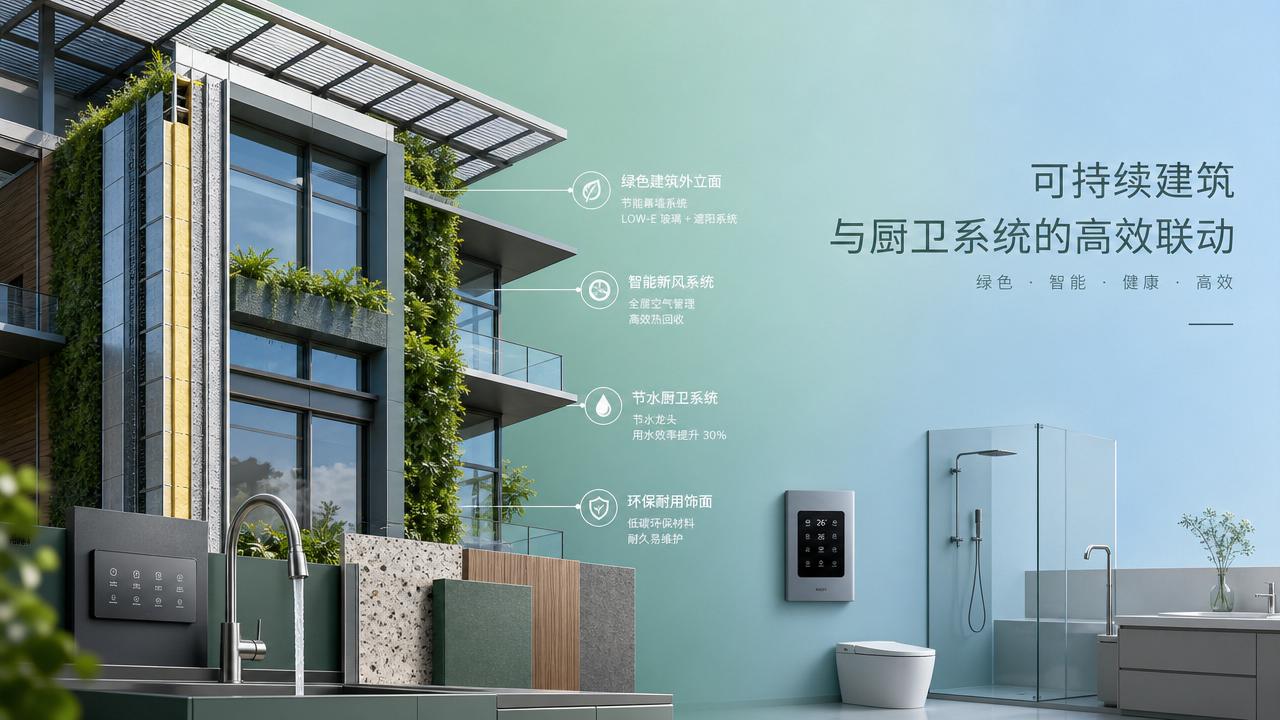
The consequences spread across multiple layers of the built environment. They influence envelope choices, interior finishes, sanitary performance, and smart kitchen and bath system reliability.
When sustainable architecture underperforms, the impact is not only environmental. It can alter maintenance budgets, occupant satisfaction, brand reputation, and future specification confidence.
Common downstream effects
- Premium materials are replaced with less durable alternatives late in the project.
- Water-saving fixtures fail to deliver expected user comfort or maintenance ease.
- Smart systems increase service requirements because integration was incomplete.
- Indoor environmental quality targets become harder to verify after handover.
- Stakeholders become cautious about future sustainable architecture investments.
This is especially relevant in sectors where aesthetics and technical performance must coexist. High-traffic commercial spaces and advanced residential projects cannot treat sustainability as a standalone layer.
What deserves closer attention in the next phase of sustainable architecture
The next wave of sustainable architecture will likely be judged less by slogans and more by verification, maintenance logic, and supply intelligence.
Core focus points
- Specify materials using both environmental data and real-use durability evidence.
- Evaluate sanitary and kitchen systems through water efficiency plus serviceability.
- Test smart controls for interoperability before full deployment.
- Track embodied carbon together with replacement frequency and maintenance inputs.
- Build tariff and sourcing scenarios into sustainability planning.
- Use post-occupancy data to correct design assumptions quickly.
GIAM’s intelligence perspective supports this shift by connecting materials science, hydraulic design, and market scanning. That combination is increasingly necessary for credible sustainable architecture decisions.
Practical ways to respond before gaps become project risks
A more disciplined response does not slow innovation. It makes sustainable architecture more investable, more comparable, and more durable across the full building lifecycle.
A clearer next step for better sustainable architecture decisions
The future of sustainable architecture will depend on deeper coordination between standards, material intelligence, water efficiency, and smart space performance. Ambition alone is no longer enough.
Stronger outcomes come from asking harder questions early: Will this system last, can it be sourced reliably, will users operate it correctly, and can performance be verified later?
Organizations that want practical insight should monitor evolving building standards, commercial material demand, and technology integration trends together rather than in isolation.
GIAM provides that connected view through sector news, trend analysis, and market intelligence across core materials and smart living systems. In a market demanding proof, that integrated perspective helps sustainable architecture move closer to real performance.
Industry Briefing
Get the top 5 industry headlines delivered to your inbox every morning.