Interior architecture materials that age better in use
Choosing interior architecture materials that improve rather than decline with daily use is essential for operators and end users who value durability, hygiene, and long-term performance. From resilient surfaces to smart, low-maintenance systems, the right material choices can reduce lifecycle costs while supporting better spatial comfort, safety, and visual appeal in both residential and commercial environments.
What people really mean when they search for “materials that age better”
When users search for interior architecture materials that age better in use, they are usually not looking for a design mood board. They want practical guidance on which materials will stay attractive, serviceable, and cost-efficient after years of traffic, cleaning, moisture, and daily impact.
The core intent is comparison: which materials wear gracefully, which ones stain or scratch too easily, and which choices make sense for bathrooms, kitchens, corridors, reception areas, or high-use homes. For operators, the question is even sharper: what reduces maintenance complaints, replacement cycles, and hidden downtime?
What durable materials should be judged on first
A material that “ages well” is not simply one that looks premium on day one. It should maintain its function and appearance under realistic use, including abrasion, humidity, thermal change, chemical cleaning, and repeated contact. In practice, that means assessing more than texture or color.
Decision makers should focus on five factors: surface resistance, repairability, hygiene, moisture tolerance, and visual aging. A good material may show light patina, but it should not fail structurally, trap dirt, or become expensive to restore. For commercial spaces, consistency matters; for residential spaces, comfort and easy upkeep matter just as much.
Which interior architecture materials usually age better in real use
Porcelain tile remains one of the most reliable choices for floors and wet zones. It resists stains, water, and heavy foot traffic, and its visual condition usually stays stable for years. For bathrooms, kitchens, and public corridors, it offers a strong balance of durability and hygiene.
Natural stone can age beautifully, but only when the application matches the maintenance capability. Dense stones such as granite or quartzite perform better than softer stones in demanding spaces. The benefit is character over time; the risk is sensitivity to acids, sealing intervals, and surface wear if the operator expects zero maintenance.
Engineered stone and solid-surface materials are often preferred where uniformity and cleanability are priorities. They are especially useful for counters, vanity tops, and integrated wash areas. Their aging performance depends less on glamour and more on whether joints, edges, and repair methods are designed correctly.
Compact laminate and high-pressure laminate systems can perform well in dry or semi-humid interiors, especially when the core, edge treatment, and installation details are carefully executed. They are practical in cabinetry, partitions, and wall surfaces where cost control and replaceability matter.
Stainless steel and other metal surfaces age well in operational zones where hygiene and impact resistance are important. They can scratch, but that visual wear is often acceptable or even desirable in food prep, back-of-house, and utility areas because function remains intact.
Engineered wood with durable finishes can outperform untreated natural wood when the goal is warmth without excessive upkeep. It is best used where moisture exposure is controlled and where finishes can be renewed rather than the entire material replaced.
Where material aging matters most: kitchens, baths, and circulation zones
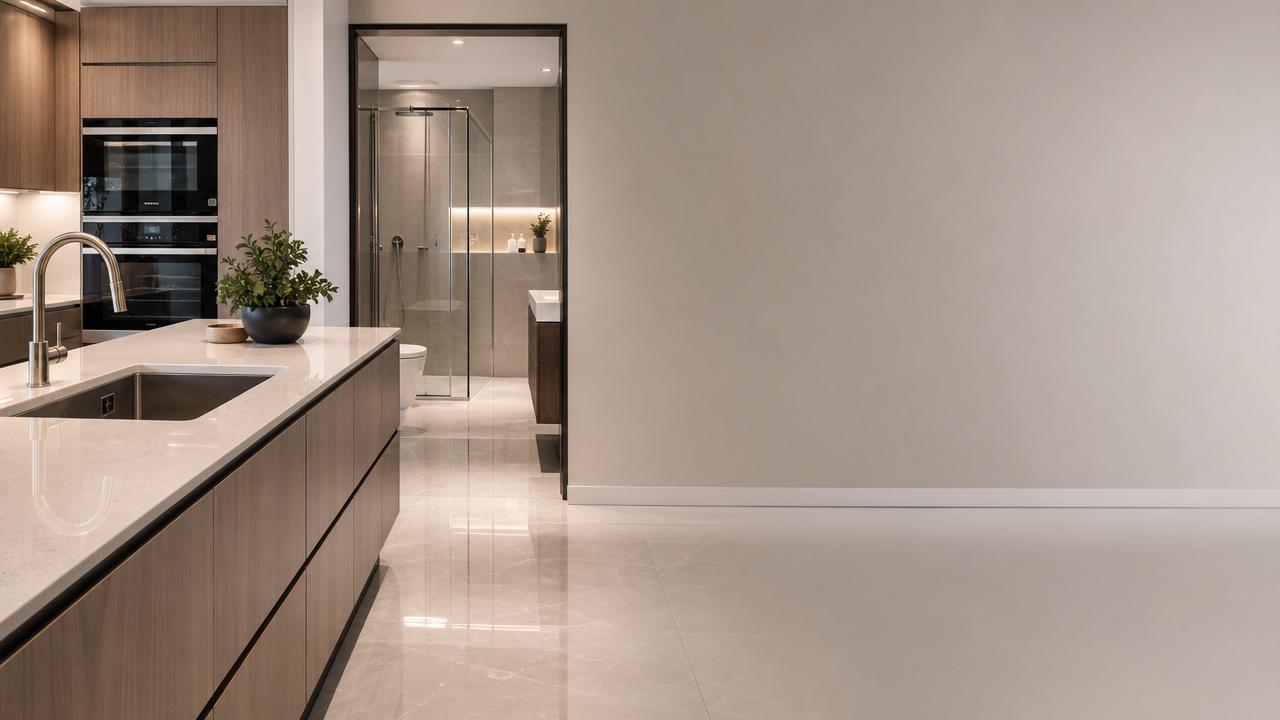
Kitchens and bathrooms are the harshest testing grounds for interior architecture materials. Heat, water, cleaning agents, and repeated touch all accelerate visible aging. In these spaces, the best materials are not the most delicate or expressive; they are the ones that remain clean, stable, and easy to service.
For floors and splash zones, prioritize low-porosity materials and sealed joints. For counters and cabinetry, pay attention to edge durability, not just the main surface. In circulation areas such as lobbies, corridors, and stair landings, the key issue is wear pattern: the material should tolerate concentrated traffic without looking patchy after one year.
How operators can compare lifecycle value, not just upfront price
Operators often overfocus on unit price and underweight replacement cost, cleaning labor, downtime, and customer perception. A cheaper surface can become more expensive if it needs frequent repair, specialized care, or early replacement. The better question is: what is the total cost over the space’s service life?
A practical comparison should include installation complexity, maintenance frequency, damage visibility, and repair speed. Materials that can be locally patched, regrouted, refinished, or swapped in modules usually offer better operational value than materials that require full-area replacement after minor damage.
This is especially relevant for commercial spaces, hospitality projects, rental housing, and shared facilities. In those settings, visual degradation directly affects perceived quality, occupancy confidence, and brand trust. Material selection is therefore not just a design decision; it is a service strategy.
What to ask before specifying a material
Before choosing any interior architecture material, ask four direct questions: How does it behave under moisture and cleaning? Can it be repaired without major disruption? Will it still look acceptable after repeated use? Does it fit the maintenance capacity of the actual operator?
If the answer depends on ideal conditions that will never exist in practice, the material is probably a poor fit. The best specifications are honest about how a space is really used. A family bathroom, a hotel corridor, and a clinic handwash area each demand different aging behavior, even if the finish palette looks similar.
Designing for graceful aging instead of short-term perfection
Materials that age better are often those that embrace controlled patina rather than visible damage. The goal is not to keep every surface looking untouched; it is to keep the space looking intentional, clean, and well-managed after use. That difference matters in both residential and commercial interiors.
Good detailing amplifies good material performance. Proper drainage, edge protection, ventilation, sealants, and replaceable components can make an average material perform well, while poor detailing can make premium material fail early. In other words, aging is not only about the material itself, but also about how the material is installed and operated.
Conclusion: choose materials that support real-life performance
Interior architecture materials that age better in use share one trait: they preserve function, hygiene, and visual order under real-world stress. Porcelain tile, dense stone, engineered surfaces, metal, and well-finished composites can all perform well when matched to the right space and maintenance model.
For users and operators, the most reliable decision rule is simple: prioritize lifecycle value over initial appearance. If a material is easy to clean, hard to damage, simple to repair, and stable in everyday conditions, it is more likely to remain a good investment long after installation.
Industry Briefing
Get the top 5 industry headlines delivered to your inbox every morning.