
Baumarkt Alliance Lifts Digital Lock Buying for 2026
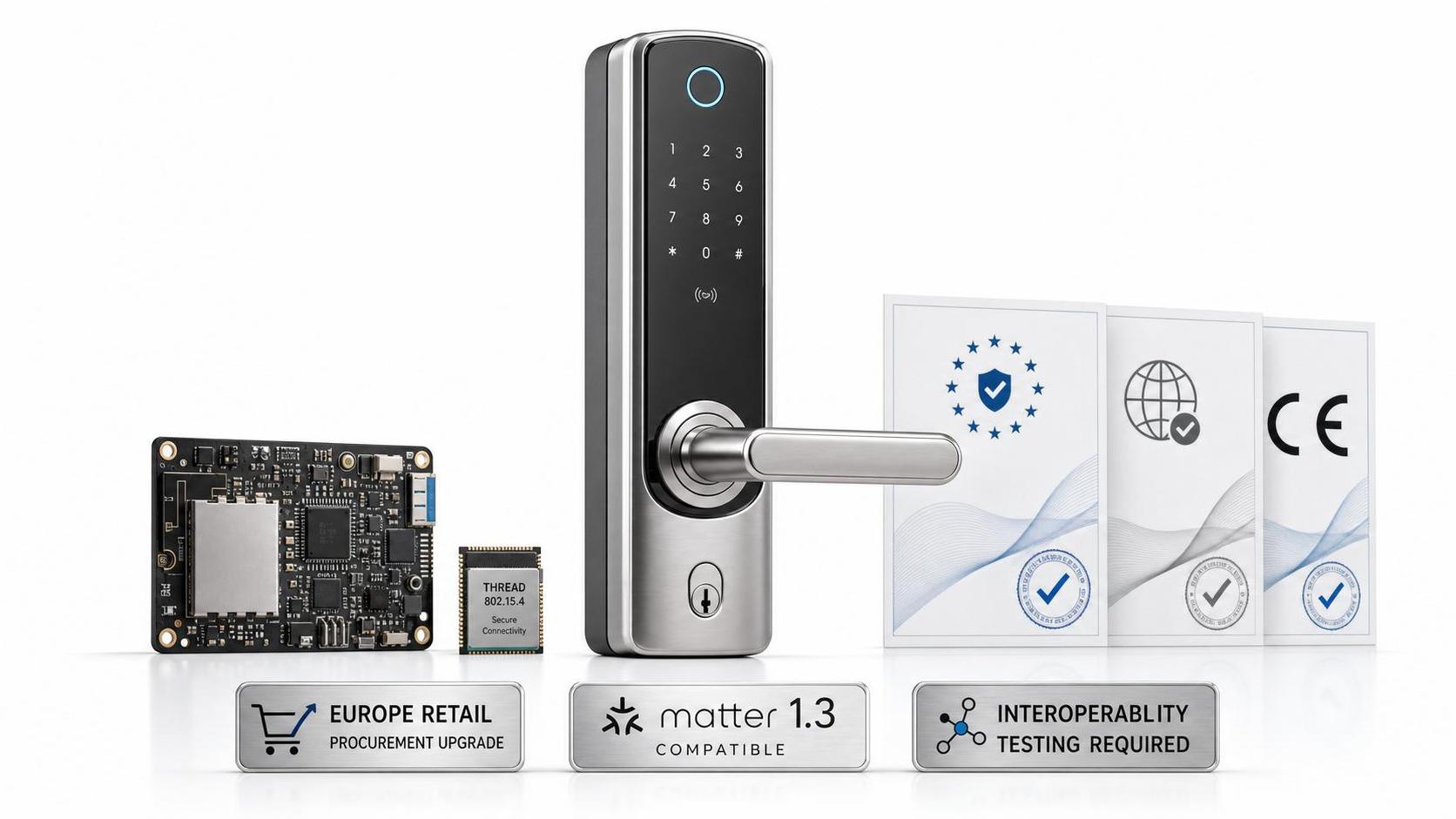
On July 2, 2026, Germany’s Baumarkt Alliance signaled a sharper purchasing focus on digital locks for the 2026 autumn buying season, pairing a 37% year-on-year budget increase with a stricter technical requirement around Matter 1.3 over Thread. For digital lock manufacturers, component suppliers, certification service providers, and export-oriented suppliers already linked to European retail channels, this is notable because the message is not only about demand expansion, but also about a clearer market-entry threshold tied to interoperability and documentation.
What the 2026 procurement paper confirms
Baumarkt Alliance, described in the provided information as Germany’s largest building materials retail alliance and covering 12 major channels including Obi, Hornbach, and Toom, released its 2026 autumn procurement white paper on July 2, 2026. According to the provided event summary, the alliance raised its procurement budget for the Digital Locks category by 37% year on year.
The same document also adjusted the core technical threshold for the category. The requirement stated in the input is that products must support Matter 1.3 over Thread. In addition, suppliers are required to provide a TÜV Rheinland Matter interoperability test report.
The input further states that this signal has already been transmitted into the alliance’s tendering system for its Chinese strategic suppliers, with the first shortlist deadline set for July 25, 2026.
Why different parts of the chain may feel the impact
Export-facing lock manufacturers may face a narrower qualification window
From an industry perspective, manufacturers targeting German retail distribution may be affected first because the procurement signal combines higher category demand with a more explicit technical gate. The impact is likely to appear in product qualification, tender preparation, and model selection, especially where existing digital lock lines do not yet align with Matter 1.3 over Thread or cannot present the required interoperability report on time.
Component and module suppliers may see specification pressure move upstream
Analysis shows that when a retail alliance formalizes protocol compatibility as a purchasing condition, technical pressure often shifts upstream into the component and module stage. In this case, the practical point of attention is not a confirmed order shift, but whether suppliers serving digital lock makers are being asked to support Thread-based connectivity and the documentation needed for downstream interoperability verification.
Testing and compliance service providers may become more central to deal execution
The requirement for a TÜV Rheinland Matter interoperability test report means certification and testing are not peripheral issues in this procurement cycle. For service providers in compliance, lab coordination, and technical documentation support, the relevant business link is likely to be pre-bid readiness and file completeness rather than post-shipment correction.
Procurement and channel teams will need to balance demand with admissibility
For buying teams and channel-side category managers, the event suggests that budget expansion alone does not define opportunity. What deserves closer attention is the alignment between commercial demand and admissible supply: suppliers may only be commercially relevant if they can meet the stated protocol and testing thresholds within the tender timeline already referenced in the input.
What companies should track right now
Whether product claims match the stated protocol threshold
Companies involved in bidding or supply preparation should closely compare current product specifications against the stated requirement of Matter 1.3 over Thread. This is a practical checkpoint because the white paper language, as provided in the input, describes this as a must-have threshold rather than a preferred feature.
Whether documentation readiness can keep pace with the deadline
The first shortlist deadline of July 25, 2026, puts attention on document readiness as much as on hardware readiness. Suppliers should examine whether the required TÜV Rheinland Matter interoperability test report is already available, in process, or still pending, because missing paperwork could affect eligibility even where commercial interest exists.
How China-linked supplier bidding requirements are being translated in practice
Observably, the event is especially relevant for suppliers connected to the alliance’s Chinese strategic supplier tendering system. What deserves closer attention is the distinction between a procurement signal and its operational translation: companies should monitor how the published threshold is reflected in tender documents, qualification rules, and communication with sourcing teams.
Which models and delivery plans remain realistic under the new screen
For sales, product, and supply chain teams, this is also a planning issue. The immediate question is not simply whether demand is rising, but which product models can realistically clear the compatibility and reporting requirements within the procurement window, and how that affects delivery planning and customer communication.
How this signal should be read at this stage
Analysis shows that this development carries both a short-term and a structural message. The short-term message is straightforward: a major German retail alliance has attached a higher budget to digital locks while tightening technical access conditions for the upcoming procurement cycle. The structural message is more about standardization discipline, because compatibility and third-party interoperability reporting are being treated as procurement filters rather than optional add-ons.
At the same time, it would be premature to treat this as a confirmed market-wide outcome beyond the facts provided. The input confirms a budget increase, a protocol requirement, a test-report requirement, and a shortlist deadline. It does not confirm final awarded volumes, specific supplier winners, or the broader adoption pace beyond the described alliance process. For that reason, this is more appropriate to understand as a strong procurement signal with clear operational consequences, while still requiring continued observation.
What the development means in practical terms
In practical terms, this update matters because it links demand growth in digital locks with a documented interoperability threshold inside a major retail procurement framework. For suppliers and service providers, the near-term implication is less about broad market narratives and more about qualification readiness, technical compliance, and timing. At this point, the development is best understood as a concrete buying-season signal with immediate relevance for bidding and product admissibility, and as a longer-term indication that protocol compatibility is moving closer to the center of retail procurement decisions.
Basis of this article and points to verify further
This article is based on the user-provided news title, event date, and event summary. The fact base used here is limited to the provided information about Baumarkt Alliance’s 2026 autumn procurement white paper, the stated 37% year-on-year budget increase for Digital Locks, the requirement for Matter 1.3 over Thread, the TÜV Rheinland Matter interoperability test report requirement, the transmission of this signal to the Chinese strategic supplier tendering system, and the July 25, 2026 first-shortlist deadline.
For this type of industry update, source types that are usually relevant include official procurement notices, company announcements, retail alliance communications, industry association materials, standards-related documents, and reporting by authoritative trade media. A specific official source link was not provided in the input, so the underlying document trail still requires ongoing verification. Follow-up attention should focus on whether subsequent procurement rules, shortlist disclosures, or technical clarification documents further refine the stated compatibility and documentation requirements.
Industry Briefing
Get the top 5 industry headlines delivered to your inbox every morning.