
SASO Mandates AI Video Audits for Digital Locks
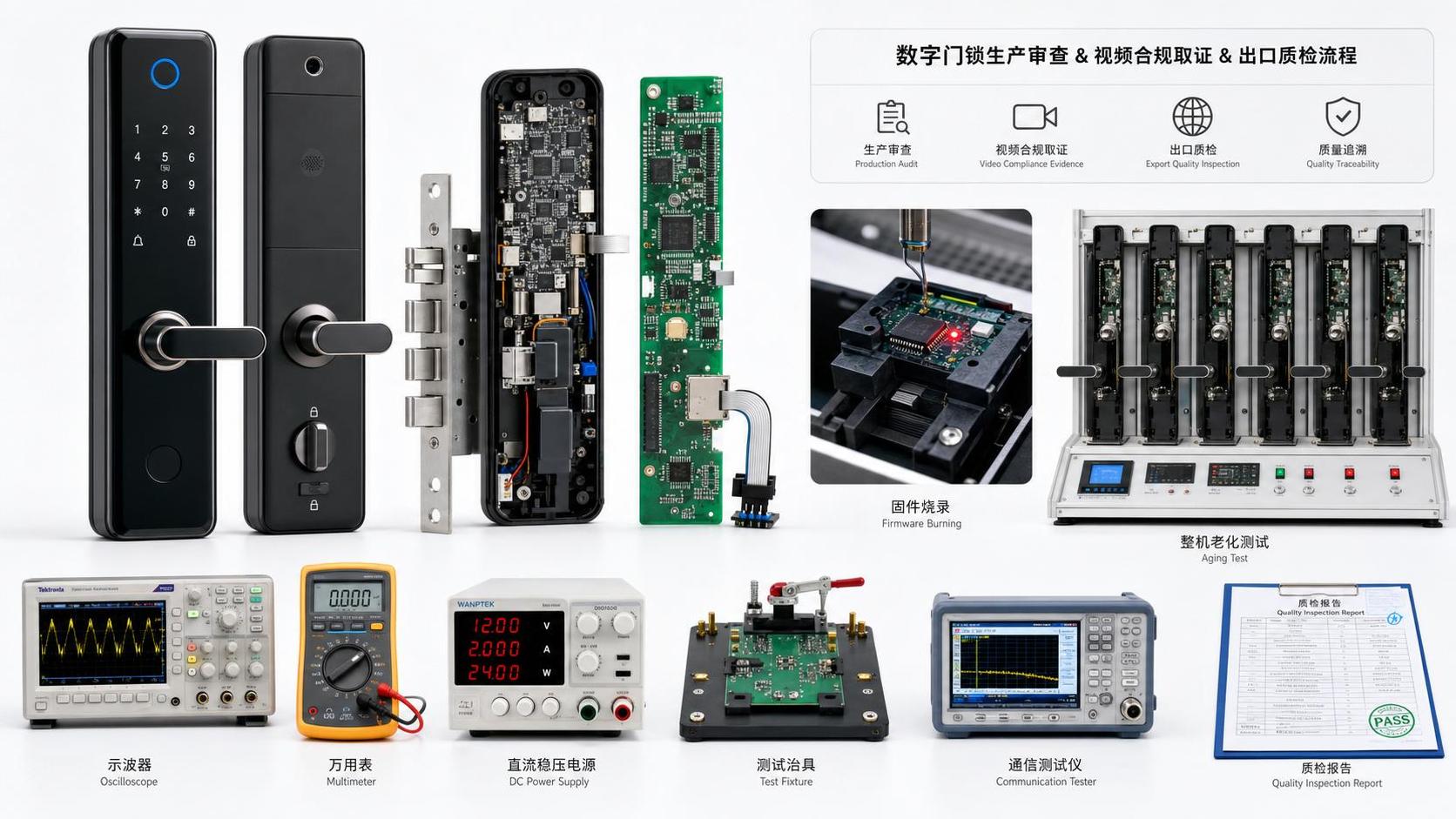
On July 15, 2026, Saudi Arabia’s SASO moved from pilot use to mandatory enforcement of a new Smart Audit 2.0 requirement for the Digital Locks category. The change matters because it shifts part of import compliance from document review toward pre-clearance visual verification: registered importers must submit time-bound production video from Chinese suppliers before each customs declaration, and the system is designed to flag irregular manufacturing behavior through AI review. For digital lock suppliers, importers, compliance teams, and shipment planners, this is not just a technical platform update but a new operational checkpoint that can affect audit readiness, submission timing, and coordination across production and trade workflows.
What the new requirement formally introduces
According to the information provided, SASO launched the SASO Smart Audit 2.0 platform on June 29, 2026. For the Digital Locks category, all registered importers are required to upload a continuous 10-minute high-definition video stream covering key production stages at their Chinese suppliers, including PCB assembly, firmware flashing, and whole-unit aging. The upload must be completed within 72 hours before each customs declaration. The platform also enables AI-based detection of abnormal actions, with skipping the EMC testing step cited as an example. The system entered trial operation on the launch date and became mandatory on July 15, 2026.
Where the compliance burden is likely to shift
Import-side control moves closer to factory operations
From an industry perspective, registered importers are likely to feel the change first because the filing obligation is attached to the pre-declaration stage. That means importer compliance is no longer limited to collecting conventional product and shipment documentation; it now appears tied to the supplier’s ability to provide usable production evidence within a fixed time window. What deserves closer attention is whether importer teams have a stable process for obtaining, reviewing, and submitting the required footage before customs filing.
Chinese manufacturers may face tighter process visibility demands
For manufacturers supplying digital locks, the rule change points to a more direct compliance link between factory-floor execution and export readiness. The affected stages named in the provided information are PCB assembly, firmware flashing, and whole-unit aging, which means those production nodes may now require more disciplined video capture, internal coordination, and traceable handoff to customers or importer compliance teams. Analysis shows the practical issue is not only whether production occurred, but whether it can be presented in a format and sequence acceptable for remote review.
Shipment scheduling and handover timing may become more sensitive
Export and logistics coordination may also be affected because the requirement is tied to a 72-hour pre-declaration deadline. Observably, any delay in collecting compliant video evidence could create pressure on documentation sequencing, customs filing preparation, and shipment release planning. While the provided information does not state specific customs consequences, businesses involved in delivery planning should treat the video submission step as a live compliance dependency rather than a background administrative task.
Testing and certification support functions may come under closer scrutiny
Because the platform is described as capable of identifying abnormal actions such as skipping EMC testing, certification-related and testing-related support functions may need to pay closer attention to how manufacturing records align with declared compliance procedures. It is more appropriate to understand this as a signal that audit review is moving beyond static paperwork toward cross-checking between process behavior and formal compliance claims.
What companies should review now
Check whether internal filing timelines still work
Companies involved in Digital Locks trade should review whether existing customs declaration preparation timelines leave enough room to gather and submit the required footage within 72 hours. Analysis shows that a rule framed around each declaration creates a recurring operational obligation, not a one-time onboarding step.
Align supplier coordination with the named production stages
Businesses should pay close attention to the specific stages identified in the provided information: PCB assembly, firmware flashing, and whole-unit aging. Where supplier management depends on broad compliance undertakings rather than stage-specific evidence collection, that approach may no longer be sufficient for this product category.
Review how technical records and video evidence connect
What deserves closer attention is the relationship between video material and existing technical or compliance documentation. Even though the input does not provide detailed execution rules, companies should monitor whether future official wording or market practice clarifies expectations around footage continuity, stage identification, retention, or consistency with test and quality records.
Watch for further clarification in implementation practice
The available information confirms the launch, trial start, scope, upload timing, and mandatory date, but it does not provide a fuller enforcement manual. For that reason, firms should continue tracking any later clarification on review criteria, acceptance standards, exception handling, or how AI-flagged anomalies are treated in practice.
Why this looks like an execution signal, not only a platform update
Analysis shows this development is better read as a concrete compliance implementation signal rather than a general digitalization announcement. The reason is that the requirement is product-specific, linked to each customs declaration, and tied to a mandatory date. At the same time, it would be premature to treat all downstream consequences as settled, because the provided information does not define the full enforcement mechanics or market response. Observably, the most important near-term issue is not abstract policy direction but how consistently the rule is applied in actual filing and audit workflows.
How the market should interpret the July 15 start date
At this stage, it is more appropriate to understand the July 15, 2026 milestone as an already effective compliance change for Digital Locks, combined with a rule area that still requires close observation in execution. The confirmed facts show that the requirement has moved beyond trial status into mandatory use. The open question is how detailed implementation standards, audit tolerance, and industry adaptation will develop after enforcement begins.
Basis of this article
This article is based on the user-provided news title, event date, and event summary. For developments of this kind, relevant source types commonly include official notices, regulator releases, customs or trade authority information, industry association updates, standards organization documents, and reporting by authoritative trade media. No specific official source link was provided in the input, so the exact official publication path still requires follow-up verification. Further monitoring is also needed for any detailed implementation guidance, certification interpretation, filing practice changes, tender document adjustments, market feedback, and company-level execution outcomes.
Industry Briefing
Get the top 5 industry headlines delivered to your inbox every morning.