
How sustainable urban materials reshape city projects
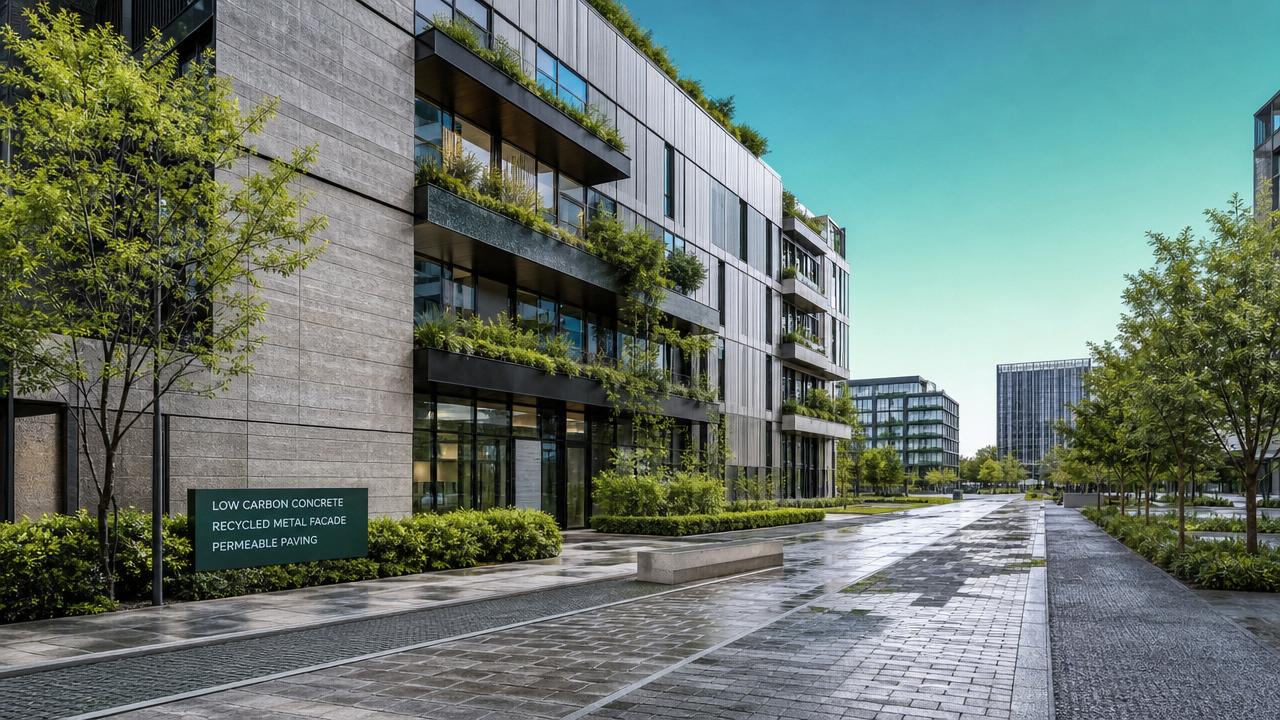
As cities face stricter carbon targets, rising infrastructure costs, and growing demand for healthier spaces, sustainable urban materials are becoming central to modern project planning.
For information researchers, the key takeaway is clear: these materials are no longer niche upgrades. They are increasingly practical tools for managing compliance, lifecycle cost, public value, and project resilience.
This shift matters because city projects are judged on more than upfront delivery. They must now perform across emissions, durability, maintenance, occupant wellbeing, and long-term adaptability.
Understanding how sustainable urban materials reshape city projects therefore means looking beyond product labels. The real question is how they change decisions, budgets, risks, specifications, and competitive positioning.
What are searchers really trying to understand?
People searching for sustainable urban materials usually want more than a definition. They are trying to assess whether these materials deliver measurable value in real urban development conditions.
They often want to know which materials are gaining traction, what problems they solve, how they affect project economics, and whether sustainability claims hold up under technical scrutiny.
For researchers, another common intent is comparative. They may be benchmarking materials across carbon impact, durability, regulatory fit, maintenance requirements, and suitability for different building or infrastructure types.
That means the most useful discussion is not broad environmental messaging. It is a grounded review of why adoption is accelerating and what decision-makers should examine before specifying materials at scale.
Why city projects are changing their material priorities
Urban projects face growing pressure from several directions at once. Carbon disclosure rules are tightening, energy codes are evolving, and procurement frameworks increasingly favor transparent environmental performance.
At the same time, municipalities, developers, and public agencies are under budget pressure. They need materials that reduce operating costs, extend service life, and lower disruption from repairs or replacement.
Health expectations are also rising. Materials now influence indoor air quality, moisture control, anti-bacterial performance, acoustic comfort, and thermal stability in homes, offices, schools, and civic buildings.
These combined pressures are reshaping selection criteria. A material that is cheap at purchase but expensive to maintain, carbon intensive to produce, or difficult to recycle now looks less attractive.
In this context, sustainable urban materials are being evaluated as strategic assets. They help projects meet environmental goals while supporting performance, user experience, and long-term asset value.
Which sustainable urban materials are having the biggest impact?
The category is broad, but several material groups are especially influential in current city projects. Low-carbon concrete is one of the most significant because of concrete’s huge share in urban construction emissions.
By using supplementary cementitious materials, carbon-mineralized processes, or alternative binders, newer concrete systems can reduce embodied carbon while maintaining structural performance for many applications.
Recycled steel and aluminum also matter because urban projects consume vast amounts of metal. Increased recycled content can cut resource demand and emissions without necessarily compromising strength or fabrication quality.
Engineered timber is gaining attention in selected mid-rise and hybrid developments. It offers lower embodied carbon potential, prefabrication benefits, and warmer interior aesthetics, though fire code and sourcing issues remain important.
Recycled composites are increasingly used in facades, decking, street furniture, partitions, and utility applications. Their appeal often lies in durability, lower maintenance, and productive reuse of waste streams.
Permeable paving and water-sensitive surface materials are important in climate adaptation. They support stormwater management, reduce runoff pressure, and contribute to more resilient public realm design.
Advanced insulation, low-emission finishes, anti-bacterial surfaces, and smart kitchen and bath materials are also shaping urban interiors. These systems connect sustainability with hygiene, energy performance, and user wellbeing.
How these materials change project economics, not just sustainability metrics
A common mistake is to evaluate sustainable urban materials only by upfront cost. In practice, their strongest influence often appears in lifecycle economics rather than initial procurement pricing.
Materials with longer service life, lower maintenance demand, and better energy performance can reduce whole-life expenditure, especially in high-use urban assets such as schools, transit hubs, healthcare facilities, and housing.
Low-carbon or recycled materials can also support access to green finance, planning approvals, ESG reporting goals, or premium positioning in competitive development markets. That strategic value is often undercounted.
Prefabricated sustainable systems may shorten installation time and reduce waste on site. Faster delivery can lower labor exposure, limit disruption in dense urban zones, and improve certainty for complex project schedules.
However, value is not automatic. Decision-makers still need to examine supply reliability, testing data, code acceptance, replacement cycles, and installer familiarity before assuming a positive cost outcome.
How sustainable urban materials reshape design and planning decisions
These materials do more than substitute one product for another. They often influence early-stage planning, because embodied carbon, water performance, circularity, and health targets increasingly affect design intent.
For example, specifying lower-carbon structural systems may change span strategies, prefabrication logic, structural depth, or transport planning. Material choices can therefore shape architecture and engineering from concept stage onward.
In public space projects, resilient paving, recycled components, and heat-mitigating surfaces can affect drainage planning, maintenance regimes, and urban comfort outcomes in ways conventional materials may not achieve.
In interior environments, the shift is equally significant. Smart sanitary materials, water-saving fittings, and durable low-emission finishes connect sustainability goals with hygiene, aesthetics, and operational intelligence.
This integrated view is increasingly important for city projects because stakeholders want built environments that perform environmentally while still feeling modern, safe, and visually coherent.
What concerns still slow adoption?
Despite strong momentum, several concerns remain. One is performance uncertainty, especially when products are new, locally untested, or supported by limited long-term field data.
Another issue is greenwashing. Some materials are marketed as sustainable based on a single attribute while ignoring emissions from transport, difficult end-of-life handling, or inconsistent sourcing practices.
Procurement teams may also face fragmented standards. Environmental product declarations, recycled content claims, durability testing, and health certifications do not always align across markets or suppliers.
Cost perception is another barrier. Even when lifecycle value is favorable, buyers may still prioritize lowest bid structures that reward short-term savings over long-term operational performance.
Installation capability matters too. If contractors or fabricators are unfamiliar with a material system, projects may face delays, quality risks, or conservative pushback during approval and delivery stages.
How researchers and decision-makers can evaluate material value more effectively
For information researchers, the best approach is to compare materials through a decision framework rather than a sustainability slogan. Start with the project type, climate, regulatory context, and performance priorities.
Then assess embodied carbon, operational impact, durability, maintenance frequency, health profile, water performance, and end-of-life recovery potential. These criteria usually reveal trade-offs more clearly than marketing summaries.
It is also important to verify whether claims are backed by credible documentation. Environmental product declarations, lifecycle assessments, third-party certifications, and code compliance records should be reviewed closely.
Supply chain resilience deserves equal attention. A material may look impressive on paper but fail to support project delivery if regional availability, lead times, or quality consistency are weak.
Finally, evaluate fit with user expectations. In urban projects, materials must work not only for designers and engineers, but also for operators, occupants, maintenance teams, and public stakeholders.
Where GIAM-style intelligence becomes especially useful
Because sustainable urban materials sit at the intersection of science, design, policy, and market economics, decision quality depends on structured intelligence rather than scattered product information.
This is where sector-focused analysis becomes valuable. Tracking changes in building standards, tariff movements, water-saving technologies, anti-bacterial materials, and smart space systems helps users see market direction earlier.
It also helps researchers connect material selection with broader commercial signals. Demand for premium building materials, sanitary systems, and smart kitchen and bath solutions increasingly reflects urbanization and policy change.
For manufacturers and project strategists, that intelligence can identify where material innovation creates pricing power, specification advantages, and brand differentiation in a more sustainability-driven construction environment.
What the next phase of city material innovation will likely look like
The next phase will likely be defined by integration. Instead of evaluating materials only as isolated products, city projects will increasingly assess them as parts of data-rich, circular, and performance-oriented systems.
That means materials may be selected not just for carbon reduction, but also for compatibility with smart monitoring, modular replacement, water efficiency, hygiene management, and adaptive reuse strategies.
Urban resilience will also become more central. Heat stress, water scarcity, flooding, and public health concerns are pushing cities toward materials that contribute to mitigation as well as sustainability reporting.
As this happens, the winners will likely be materials that combine verified environmental value with practical strengths: durability, attractive design, manageable cost, regulatory acceptance, and supply chain credibility.
Conclusion: sustainable urban materials are now a strategic city-building decision
Sustainable urban materials are reshaping city projects because they answer several urgent needs at once: lower carbon, better lifecycle value, healthier environments, and stronger resilience under evolving urban pressures.
For information researchers, the most useful perspective is not whether these materials matter. They clearly do. The more important question is which material choices create reliable value in specific project contexts.
That requires moving past broad sustainability language and focusing on evidence, application fit, long-term economics, and operational consequences. The projects that do this well gain both environmental and commercial advantages.
In short, sustainable urban materials have become a core lens for understanding the future of construction, interiors, and infrastructure in modern cities. They are shaping not only what gets built, but how urban value is defined.
Industry Briefing
Get the top 5 industry headlines delivered to your inbox every morning.