
New Maritime Law Shifts Export Delivery Risk
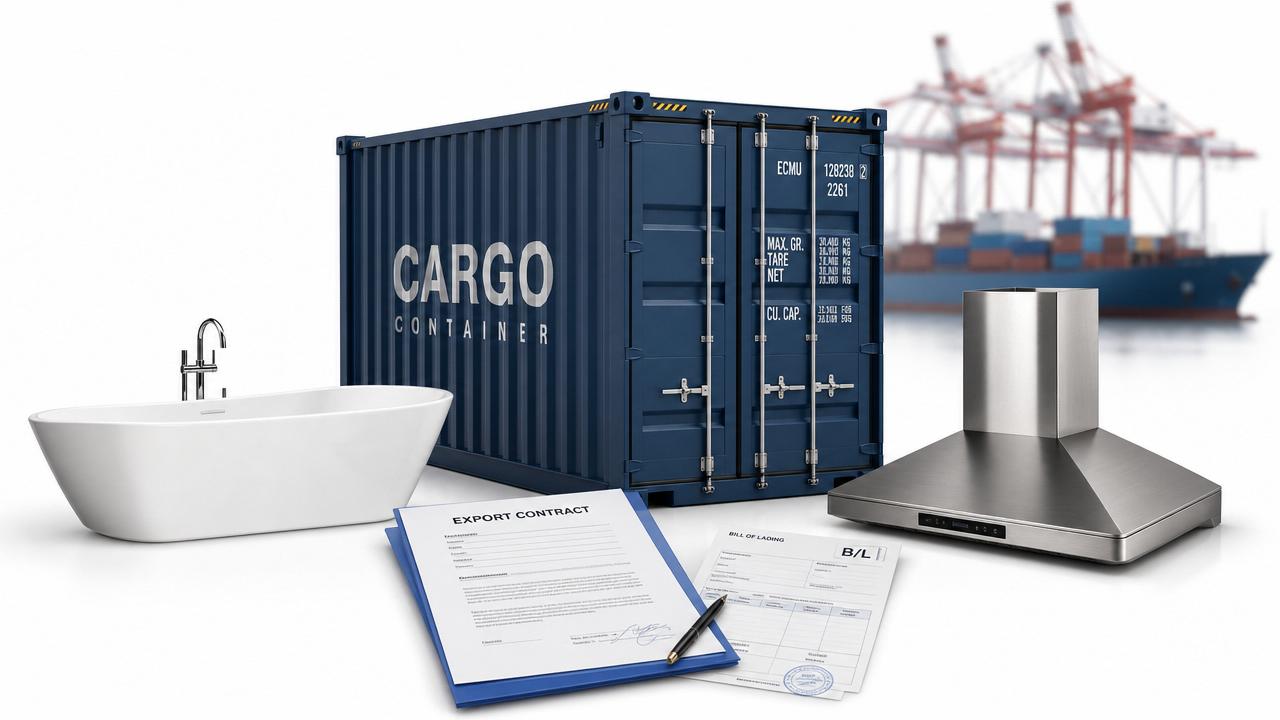
Image Placement Plan
No image placeholders are required for this article. The article will rely on structured text sections to explain the regulatory change and its implications for sanitaryware export delivery terms.
The revised Maritime Law takes effect on May 1, 2026, and its Article 93 changes the responsibility framework for cargo left unclaimed at the port of discharge. The change may affect China-based sanitaryware exporters because unclear contractual terms on destination-port customs clearance and demurrage risk could expose exporters to container detention charges and cargo disposal losses, especially for large, high-value products such as Bathtubs and Range Hoods.
What the New Rule Confirms
The confirmed event is the implementation of the revised Maritime Law on May 1, 2026. According to the provided information, Article 93 shifts primary responsibility for cargo left unclaimed at the port of discharge from the consignee to the shipper.
For China-based exporters of sanitaryware and related products, the confirmed concern is that, if contracts do not clearly define the buyer side's obligations for destination-port customs clearance and the allocation of port detention risk, the shipper may face high container detention charges and losses arising from cargo disposal.
The product categories specifically mentioned as being more exposed are large and high-value items, including Bathtubs and Range Hoods. No specific companies, monetary amounts, ports, or official source links were provided in the input.
Where the Impact May Be Felt Across the Value Chain
Export trading companies facing delivery-term exposure
From an industry perspective, direct export trading companies may be the first to feel the change because they usually sign sales contracts, coordinate shipping documents, and communicate with overseas buyers. The risk becomes more visible when the buyer fails to take delivery, delays customs clearance, or leaves goods at the destination port.
The affected business links may include contract negotiation, Incoterms selection, shipping instruction review, bill of lading coordination, and post-arrival communication. These companies may need to pay closer attention to whether contracts clearly state who is responsible for customs clearance, storage, demurrage, detention, and cargo disposal after arrival.
Raw material buyers responding to order uncertainty
Analysis shows that raw material procurement teams may be indirectly affected. If exporters become more cautious about overseas delivery risk, they may adjust order confirmation procedures, shipment timing, or inventory planning for products that are expensive to store and difficult to handle after arrival.
The relevant business links include purchase planning, supplier delivery schedules, production material allocation, and inventory buffers. Procurement teams may need to monitor whether export contracts have become more conditional before committing to raw material purchases for large sanitaryware orders.
Manufacturers managing production and shipment alignment
Processing and manufacturing enterprises may be affected because large goods such as Bathtubs require coordinated production, packaging, container loading, and shipping arrangements. If destination-port risks are not clearly allocated, shipment release decisions may become more conservative.
The impact may appear in production scheduling, finished-goods warehousing, packaging design, loading plans, and document preparation. Manufacturers may need to align production completion dates more closely with confirmed buyer readiness for customs clearance and cargo pickup at the destination.
Supply chain service providers under closer documentation checks
Supply chain service providers, including logistics coordinators and trade-service partners, may face stronger demand for document consistency and risk reminders. The revised responsibility structure makes accurate communication around shipper, consignee, delivery terms, and arrival obligations more important.
The affected links may include booking, shipping instructions, document review, arrival notices, container return coordination, and exception handling. Service providers may need to help exporters identify unclear destination-port responsibility clauses before cargo is shipped.
Practical Points Exporters Should Review
Rewrite delivery clauses around unclaimed cargo
Exporters should review whether contracts clearly state who must complete destination-port customs clearance, who must collect the goods, and who bears detention or storage costs if the consignee does not take delivery. For large products such as Bathtubs and Range Hoods, the wording should be specific enough to cover delayed pickup, abandoned cargo, and disposal-related losses.
Connect compliance checks with shipping documents
Contract compliance review should be connected with operational documents. The sales contract, shipping instructions, bill of lading information, commercial documents, and delivery notices should not create conflicting understandings of responsibility. Observably, inconsistent documentation could make post-arrival disputes harder to manage.
Adjust delivery schedules before production is locked in
For bulky, high-value goods, exporters may need to confirm buyer readiness before finalizing production completion, container booking, and shipment release. This is especially relevant where delayed clearance may quickly generate additional port-related costs.
Strengthen traceability for post-arrival disputes
Exporters should keep clear records of buyer instructions, delivery notices, shipping confirmations, and communication about customs clearance. Such records may not eliminate risk, but they can support internal risk control and help clarify the sequence of events if cargo is not collected.
Industry Observation: Contract Discipline Becomes More Important
Analysis shows that this change is more appropriately understood as a shift in trade-risk discipline rather than only a shipping-law issue. For sanitaryware exporters, the commercial contract may become as important as the logistics arrangement because unclear destination obligations can transfer operational problems back to the shipper.
What deserves closer attention is the effect on large and high-value categories. Products such as Bathtubs and Range Hoods can be more costly to store, move, or dispose of if they are not collected after arrival. This may encourage exporters to improve pre-shipment review, buyer credit checks, and delivery-term alignment.
From an industry perspective, the change may also lead to more cautious negotiation of export terms. However, this should be treated as an analytical judgment, not a confirmed market outcome. The actual impact will depend on how contracts are drafted, how buyers perform clearance obligations, and how related rules are interpreted in practice.
A Measured Conclusion for the Sanitaryware Export Sector
The implementation of the revised Maritime Law highlights a practical compliance issue for exporters: the risk of unclaimed cargo at the destination port should be addressed before shipment, not after problems arise. For sanitaryware exporters handling bulky and high-value goods, clearer delivery clauses and stronger document control may reduce avoidable disputes and unexpected costs.
The industry significance lies in the closer link between legal responsibility, trade contract wording, and logistics execution. The impact should not be overstated, but exporters with unclear destination-port risk allocation may need to review their transaction processes more carefully.
Source Note and Follow-Up Items
This article is based on the user-provided news title, event date, and event summary concerning the revised Maritime Law effective on May 1, 2026, and the responsibility shift under Article 93 for cargo left unclaimed at the port of discharge.
Specific official source links were not provided in the input and should be verified continuously. For this type of regulatory development, companies should continue to monitor official legal texts, implementation guidance, maritime practice interpretations, trade contract updates, tender document changes, certification or compliance review requirements where applicable, and feedback from exporters and supply chain service providers.
Industry Briefing
Get the top 5 industry headlines delivered to your inbox every morning.