What makes bath systems easier to maintain?
What Makes Bath Systems Easier to Maintain?
For after-sales maintenance teams, easier-to-maintain bath systems mean fewer repeat visits, faster diagnostics, and more satisfied users.
The best bath systems are designed for comfort, but also for access, durability, standardized repair, and predictable performance.
As sanitary spaces become smarter, maintenance is shifting from reactive repair toward data-supported prevention and lifecycle value protection.
This change is especially visible in hotels, apartments, healthcare facilities, commercial buildings, and premium residential projects.
Maintenance Is Becoming a Core Standard for Bath Systems
Modern bath systems are no longer judged only by surface appearance, water flow, or brand recognition.
Long-term serviceability is becoming a decisive performance indicator across sanitary spaces and architectural interiors.
The shift reflects rising labor costs, tighter building operation budgets, and higher expectations for uninterrupted user experience.
In many projects, poorly maintained bath systems create hidden costs through water leakage, downtime, odor, mold, and repeated component failure.
By contrast, easy-maintenance bath systems reduce uncertainty and support better cost control through the full use cycle.
This is why maintenance logic is now entering early design, material selection, installation planning, and digital building management.
Trend Signals Showing Why Maintainability Matters More
Several market signals show that maintainability is moving from a technical detail to a strategic requirement.
Water-saving regulations are becoming stricter, which makes precise valves, sensors, and flow-control parts more important.
At the same time, smart bath systems are adding electronic modules, temperature control, usage tracking, and fault alerts.
These upgrades improve experience, but they also demand better diagnostic access and component-level service planning.
Another signal is the demand for hygienic surfaces and antibacterial materials in shared sanitary environments.
Surfaces that resist scale, stains, bacteria, and chemical damage reduce cleaning intensity and extend visible quality.
The result is clear: bath systems must now combine material science, hydraulic design, installation intelligence, and service accessibility.
Key Drivers Behind Easier-to-Maintain Bath Systems
The maintenance advantage of bath systems usually comes from several connected design decisions, not from one isolated feature.
These drivers also influence warranty risk, service speed, and long-term asset perception in completed spaces.
Accessible Design Reduces Diagnostic Friction
Access is one of the most practical factors in easy-maintenance bath systems.
If valves, cartridges, filters, pumps, sensors, and drains are difficult to reach, every service task becomes slower.
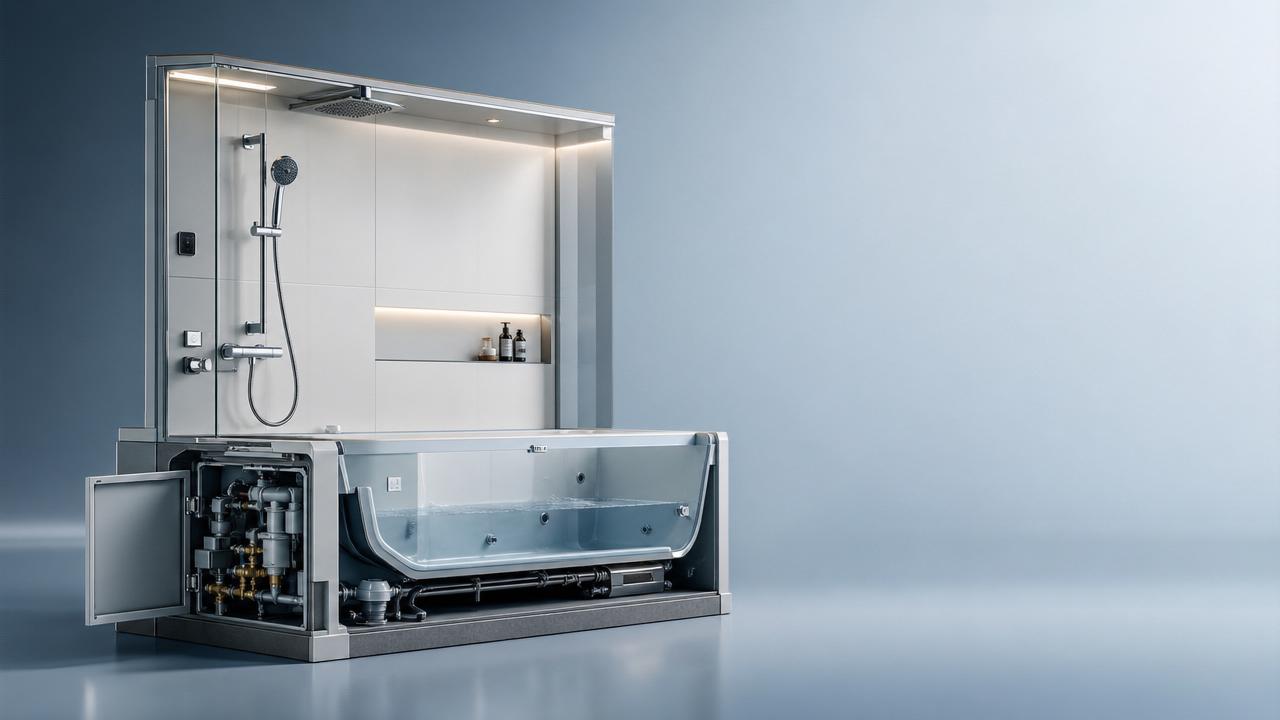
Well-designed bath systems include access panels, visible inspection points, and logical component positioning.
This avoids destructive opening of walls, floors, or decorative panels during routine diagnosis.
In commercial interiors, accessible design also helps maintenance occur outside peak usage periods.
The effect is simple: fewer interruptions, lower labor pressure, and faster recovery of functional sanitary spaces.
Practical access features to prioritize
- Removable panels near concealed mixers, valves, and pipe connections.
- Drain structures that allow hair, sediment, and scale removal.
- Clearly marked shut-off points for localized repair.
- Sensor modules positioned away from frequent splash damage.
- Installation manuals that match actual component locations.
Materials Decide How Often Bath Systems Need Service
Material durability directly affects cleaning frequency, visible aging, and failure probability.
Easy-maintenance bath systems often use surfaces that resist limescale, soap residue, fingerprints, and microbial growth.
Ceramic glazes, engineered stone, stainless alloys, acrylic composites, and advanced coatings each offer different advantages.
The key is matching material behavior with water quality, cleaning chemicals, user density, and ventilation conditions.
For example, hard-water regions require bath systems with stronger scale resistance and easier cartridge cleaning.
High-traffic projects need surfaces that tolerate repeated disinfection without dulling, cracking, or discoloration.
Material choice is therefore not cosmetic only; it is a lifecycle maintenance decision.
Standardized Parts Make Repair More Predictable
Standardization is another major reason why some bath systems are easier to maintain than others.
When cartridges, seals, hoses, sensors, and drain fittings follow common specifications, repairs become faster.
Parts can be stocked more efficiently, and fault diagnosis becomes less dependent on rare proprietary knowledge.
This is especially valuable when bath systems are installed across many rooms or distributed properties.
A fragmented component strategy often leads to delayed repair, mismatched replacements, and inconsistent performance.
A standardized platform supports repeatable installation, repeatable maintenance, and clearer warranty responsibility.
Standardization indicators worth checking
- Common valve cartridges across multiple product lines.
- Replaceable sensor batteries or protected wired modules.
- Universal connectors compatible with local plumbing norms.
- Spare part codes printed in manuals and digital records.
- Backward compatibility for core consumable components.
Smart Monitoring Is Changing Maintenance Timing
Smart bath systems are changing maintenance from a scheduled routine into a condition-based activity.
Leakage sensors, flow meters, temperature controls, and usage analytics help detect issues before visible failure.
This matters because water damage can spread quickly behind walls, floors, and cabinets.
Early alerts reduce repair scope, protect adjacent materials, and help maintain building safety.
However, intelligence only improves maintainability when digital modules are easy to calibrate, update, and replace.
Smart bath systems should not require full system replacement when one electronic component fails.
The strongest direction is modular intelligence, where sensors support service decisions without increasing repair complexity.
How Easier Maintenance Affects Different Business Links
Easier-to-maintain bath systems create benefits across design, installation, operation, and long-term asset management.
During design, maintainability supports better space planning and reduces conflicts between aesthetics and service access.
During installation, modular bath systems reduce alignment mistakes, hidden leakage risks, and inconsistent assembly quality.
During operation, maintenance records become clearer, and repeated faults can be traced to real root causes.
For building value, reliable sanitary spaces strengthen user trust and reduce negative experience caused by downtime.
- Design teams gain more realistic service routes and access planning.
- Installation teams benefit from clearer modules and fewer custom fixes.
- Operation teams reduce emergency calls and repeated troubleshooting.
- Brand owners protect reputation through lower failure visibility.
Priority Checklist for Future Bath Systems
The next generation of bath systems should be evaluated through maintenance readiness as much as visual quality.
A useful checklist should include physical access, material resilience, hydraulic stability, digital diagnostics, and documentation quality.
- Confirm that critical parts can be inspected without demolition.
- Select surfaces compatible with local water and cleaning chemicals.
- Use replaceable modules instead of tightly integrated disposable assemblies.
- Document spare part codes, service intervals, and troubleshooting steps.
- Test drainage speed, odor control, and sealing performance after installation.
- Evaluate whether smart functions simplify service or add hidden complexity.
This checklist helps bath systems move beyond attractive showrooms toward dependable long-term sanitary infrastructure.
Response Strategy: From Repair Thinking to Lifecycle Planning
The strongest response is to treat maintenance as a design requirement from the beginning.
When bath systems are selected only by upfront cost, hidden service costs often appear later.
This approach makes bath systems easier to manage and more aligned with sustainable building operation.
What to Watch Next in Maintainable Bath Systems
Several developments will shape future bath systems and their maintenance performance.
Expect wider use of antibacterial surfaces, tool-free modules, embedded leak detection, and water-quality adaptive components.
Digital product passports may also become more common for tracking spare parts and service history.
Regulations around water efficiency and building safety will keep pushing bath systems toward measurable performance.
The winning direction is not excessive complexity, but intelligent simplicity supported by strong materials and accessible engineering.
Action Direction for Better Long-Term Value
To improve service efficiency, start by auditing existing bath systems for repeated failures and difficult access points.
Then compare those findings with material choices, installation quality, spare part availability, and monitoring capability.
Future specifications should reward bath systems that reduce repair time, preserve hygiene, and protect water performance.
GIAM continues to observe how sanitary technology, material science, and smart interiors reshape maintenance standards.
The practical next step is clear: choose bath systems that are not only attractive today, but serviceable tomorrow.
Industry Briefing
Get the top 5 industry headlines delivered to your inbox every morning.