How hydraulic system design affects long-term maintenance
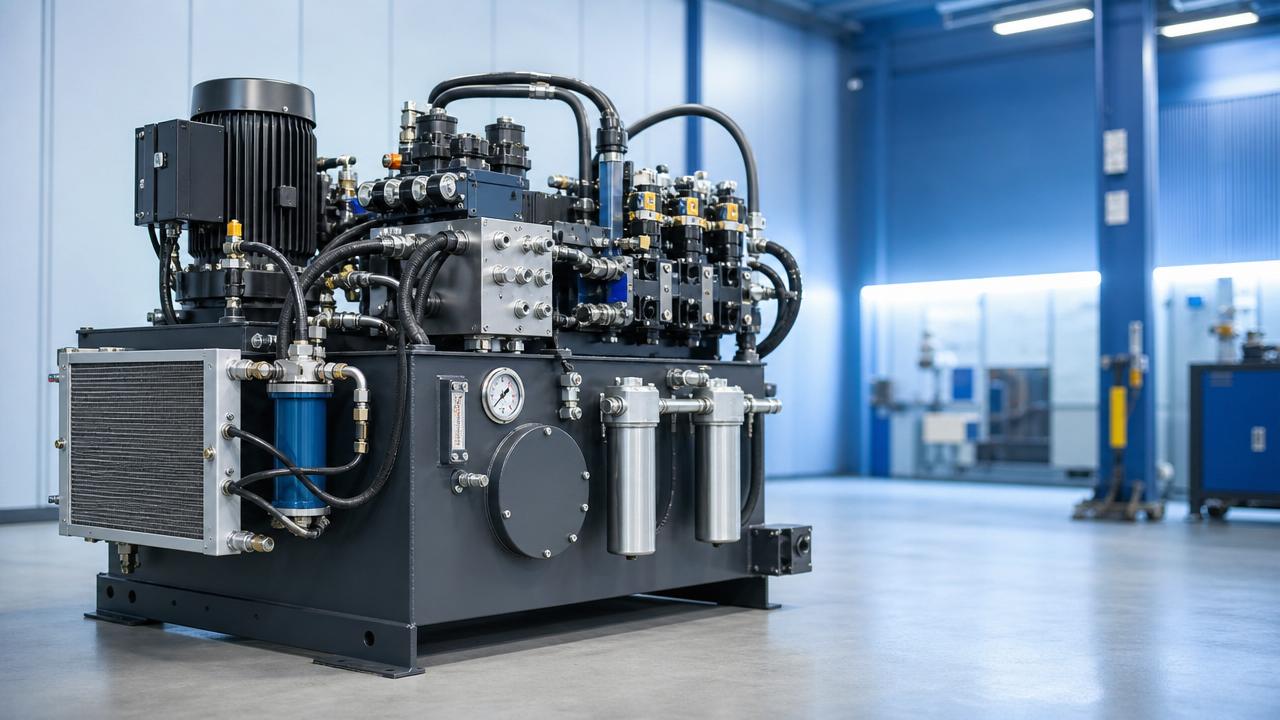
For after-sales maintenance teams, hydraulic system design is not a background engineering detail. It is one of the clearest predictors of how often a system will fail, how hard faults will be to isolate, how quickly components will wear, and how much lifetime service effort will be required. In practice, good hydraulic system design reduces contamination, heat stress, pressure shock, seal damage, and access problems. Poor design does the opposite, turning routine service into repeated emergency repair.
That is the core search intent behind this topic: maintenance personnel want to understand which design choices create long-term service burdens, which features support easier maintenance, and how to recognize design-driven failure patterns before they become chronic problems. They are not looking for theory alone. They need practical links between hydraulic system design and real field outcomes such as downtime, oil leakage, unstable pressure, noisy operation, part replacement cycles, and troubleshooting speed.
For after-sales teams, the most useful perspective is simple: many recurring hydraulic issues are not caused only by operator error or part quality. They are often built into the system through reservoir sizing, filtration layout, hose routing, thermal control, pressure settings, access limitations, and weak monitoring provisions. When technicians understand those relationships, they can diagnose more accurately, communicate more clearly with customers, and recommend upgrades that reduce future service demand.
Why Maintenance Teams Should Care About Hydraulic System Design from Day One
Long-term maintenance performance starts with design decisions made well before installation. The layout of pumps, valves, lines, filters, cylinders, sensors, and reservoirs determines how clean the fluid stays, how much heat builds up, and how easy it is to inspect, test, and repair the system safely.
When hydraulic system design is service-friendly, maintenance teams benefit in several ways. Faults are easier to trace, contamination is easier to control, replacement intervals become more predictable, and access to wear components takes less time. The result is lower service labor, fewer repeat callouts, and better equipment availability.
By contrast, maintenance becomes expensive when systems are tightly packed, poorly ventilated, over-pressurized, under-filtered, or built without clear test points. In those systems, technicians may spend more time opening access panels, isolating causes, and cleaning contamination than actually replacing the failed part.
Which Design Choices Most Often Increase Long-Term Maintenance Burden?
From a field service perspective, several design choices consistently drive long-term maintenance costs upward. The first is poor contamination control. If the system lacks proper return-line filtration, breathers, fluid cleanliness management, or protected service points, internal wear accelerates across pumps, valves, actuators, and seals.
The second major issue is poor thermal design. A hydraulic system running too hot will shorten oil life, harden seals, reduce viscosity stability, and damage sensitive components. After-sales teams usually see this as repeated leakage, sluggish actuator response, varnish buildup, and unexplained component wear.
Another common burden comes from pressure instability. Systems with frequent pressure spikes, inadequate accumulator support, abrupt valve switching, or oversized pumps place repeated stress on hoses, fittings, valve blocks, and seals. These systems often create “mystery failures” that are actually predictable design-related shock events.
Access is another overlooked design factor. Even a technically sound hydraulic system design becomes maintenance-unfriendly when filters, gauges, drain ports, and hose connections are difficult to reach. If routine inspection requires dismantling surrounding assemblies, service time and safety risk increase immediately.
How Reservoir, Filtration, and Fluid Management Shape Service Life
For maintenance personnel, fluid condition is often the fastest indicator of long-term system health. That is why reservoir design and filtration layout matter so much. A reservoir that is too small, poorly baffled, or badly ventilated cannot support proper deaeration, sediment settling, or thermal stabilization.
When air remains trapped in the fluid, technicians may observe foam, noise, erratic movement, and micro-dieseling damage inside components. Over time, this leads to oxidized oil, unstable pressure behavior, and premature wear. Many recurring field complaints begin with poor fluid handling rather than an isolated bad component.
Filter selection and placement are equally important. A hydraulic system design that only filters fluid weakly or too late in the circuit allows contamination to circulate through critical parts. Service teams then face repeated valve sticking, pump scoring, spool wear, and seal abrasion even after replacing failed components.
Good designs support maintenance by including accessible filter housings, differential pressure indicators, clean sampling points, and clear fluid fill procedures. These features help teams verify cleanliness quickly and make condition-based maintenance possible rather than relying only on breakdown response.
How Heat Management Affects Failures, Oil Life, and Repeat Callouts
Heat is one of the most expensive hidden maintenance drivers in hydraulic equipment. Even when a system appears to operate normally, chronic overheating steadily reduces fluid quality and component life. After-sales teams often discover that repeated failures share the same root cause: the system has been running beyond its thermal comfort zone.
Hydraulic system design affects heat generation through pump sizing, pressure setting, flow restriction, duty cycle planning, valve throttling strategy, and cooling capacity. A design that wastes energy as heat will create more frequent service events even if all components initially meet specification.
In the field, heat-related maintenance problems commonly appear as darkened oil, hardened seals, shrinking hose life, sticky valve movement, reduced lubricity, and unstable machine response during long operating cycles. These symptoms may be treated as separate defects, but they often point to one underlying thermal design weakness.
Maintenance teams should pay close attention to cooler sizing, airflow path, contamination on heat exchanger surfaces, and whether return flow or bypass conditions are causing unnecessary temperature rise. Better thermal control usually means fewer oil changes, fewer seal replacements, and more stable service intervals.
Why Pressure Shock and Flow Instability Cause Hidden Damage Over Time
Not all hydraulic damage develops slowly through contamination or heat. Some systems fail because pressure changes are too abrupt. Poorly controlled directional valve switching, sudden actuator stopping, and weak damping can create repeated shock loads that damage fittings, loosen joints, and fatigue seals.
For after-sales technicians, these are the systems that seem to “randomly” break hoses, crack manifolds, or leak at connections that were recently serviced. In reality, the issue may not be the replacement part or installation quality. It may be a hydraulic system design that repeatedly generates destructive transient loads.
Flow instability creates another service burden. Oversized pumps, incorrect valve characteristics, or poorly matched actuator demands can cause chatter, uneven motion, and excessive recirculation. Over time, that instability increases wear on moving parts and makes troubleshooting harder because symptoms vary by load and operating phase.
Designs that include pressure relief optimization, soft switching, proper accumulator application, and well-matched flow paths generally create fewer emergency maintenance situations. For service teams, this means fewer unexplained ruptures and a more consistent relationship between symptoms and root causes.
How Hose Routing, Component Placement, and Access Change Field Service Efficiency
Maintenance difficulty is not only about hydraulic performance. It is also about physical serviceability. A system may work well in ideal conditions but become expensive to maintain if hoses are routed through tight spaces, fittings are hidden behind structures, or filters are mounted where spills and contamination are hard to control.
After-sales personnel quickly notice whether a design respects real maintenance workflows. Can the filter be changed without disassembling nearby parts? Are pressure ports easy to connect safely? Is there room to torque fittings correctly? Can technicians inspect leak-prone areas visually during routine visits?
If the answer is no, then even simple tasks become time-consuming and error-prone. Long service procedures increase labor cost and may also discourage preventive maintenance, allowing minor issues to grow into major failures. Good hydraulic system design reduces this risk by planning for service access from the beginning.
Look for features such as labeled lines, grouped test points, protected but accessible manifolds, standardized fittings, clear drain paths, and enough clearance for tools. These are not cosmetic advantages. They directly affect downtime, technician safety, and maintenance consistency across service teams.
What Design Features Make Troubleshooting Faster and More Accurate?
From an after-sales perspective, the best hydraulic systems are not only durable. They are diagnosable. When a machine fails in the field, the speed of recovery depends heavily on how easily technicians can isolate pressure loss, flow restriction, temperature rise, contamination sources, or actuator leakage.
A maintenance-friendly hydraulic system design includes permanent pressure test points, temperature monitoring, fluid level visibility, contamination indicators, and clear circuit documentation. These features reduce guesswork and help technicians distinguish between a failed component and a broader system design problem.
Without these aids, troubleshooting becomes reactive and inefficient. Teams may replace filters, valves, sensors, or pumps in sequence without confirming the root cause. This increases parts consumption and can damage customer trust, especially when the same machine returns with similar symptoms after service.
Design transparency matters as much as hardware access. Accurate line identification, updated schematics, and consistent component labeling allow maintenance teams to work faster and with lower error rates. In long-term support environments, these details often have more practical value than advanced features with poor documentation.
Common Field Failures That Often Trace Back to Design, Not Just Wear
Many maintenance teams are asked to solve the same faults repeatedly: overheating, cavitation noise, dirty oil, drifting cylinders, hose leakage, unstable motion, frequent seal replacement, or repeated filter blockage. It is easy to treat these as normal wear issues, but repeated patterns usually suggest design influence.
Cavitation, for example, may be linked to undersized suction lines, bad reservoir outlet geometry, air ingress, or excessive fluid viscosity at startup. Replacing a noisy pump without addressing those design conditions rarely delivers lasting results. The same logic applies to valves damaged by contamination from poor filtration strategy.
Likewise, repeated rod seal failure may reflect side loading, pressure spikes, thermal hardening, or unsuitable return-line behavior rather than a low-quality seal alone. When after-sales teams think in design terms, they can stop chasing symptoms and start addressing root conditions more effectively.
This approach improves both service quality and customer communication. Instead of reporting only what failed, technicians can explain why the failure pattern continues and which design-related changes would meaningfully improve reliability over time.
How After-Sales Teams Can Evaluate a Hydraulic System for Long-Term Maintainability
Maintenance teams do not always control the original design, but they can still evaluate maintainability systematically. A useful review starts with five areas: cleanliness control, thermal performance, pressure stability, service access, and diagnostic visibility. These categories capture most of the long-term maintenance burden.
First, assess fluid health management. Check reservoir size, breather quality, filter placement, service cleanliness practices, and whether sampling points support regular condition checks. If contamination enters easily or is hard to monitor, expect recurring internal wear and inconsistent hydraulic behavior.
Second, review thermal conditions under actual duty cycles. Compare operating temperature trends with oil specification, cooler performance, and ambient conditions. If temperature rises persistently under normal work, future maintenance demand will likely increase even if the current components still function.
Third, examine pressure events and flow match. Look for evidence of shock, chatter, abrupt movement, and repeated fitting or hose failures. Fourth, assess physical access to wear items and test points. Fifth, verify whether schematics, labels, and sensor feedback support efficient diagnosis. Together, these checks provide a realistic picture of maintenance risk.
How Better Design Understanding Helps Maintenance Teams Deliver More Value
When after-sales personnel understand the maintenance consequences of hydraulic system design, they become more than repair responders. They can identify chronic reliability risks, recommend preventive corrections, and guide customers toward lower lifetime operating cost. That creates value far beyond individual service visits.
This is especially important in building-related equipment and complex interior systems where reliability, cleanliness, and uptime affect both operational safety and customer satisfaction. Design-aware maintenance supports better planning for parts inventory, service intervals, technician training, and upgrade recommendations.
It also strengthens collaboration between service teams, manufacturers, and end users. Instead of arguing over whether a failure was caused by use, parts, or maintenance, stakeholders can evaluate the actual design conditions shaping long-term performance. That leads to more productive decisions and more durable system outcomes.
Conclusion: Good Hydraulic System Design Lowers Maintenance Before the First Repair Happens
The long-term maintenance story of a hydraulic system is largely written at the design stage. Clean fluid management, stable thermal behavior, controlled pressure dynamics, accessible layouts, and strong diagnostic provisions all reduce service burden over the equipment life cycle.
For after-sales maintenance teams, the practical lesson is clear: recurring failures are often design signals, not isolated bad luck. Understanding how hydraulic system design affects long-term maintenance helps technicians troubleshoot faster, explain problems more accurately, and support changes that reduce downtime and total cost.
In the end, the best hydraulic system is not just one that performs on paper. It is one that stays serviceable, predictable, and reliable after years of real operation. For maintenance professionals, that difference matters every day.
Industry Briefing
Get the top 5 industry headlines delivered to your inbox every morning.