Architectural design trends that balance style and compliance
Architectural design trends now demand more than visual appeal. Projects must also satisfy tighter codes, sustainability targets, and measurable performance expectations across residential and commercial environments.
For technical evaluation, design quality is no longer judged by form alone. Materials, sanitary systems, and smart kitchen and bath solutions must align with compliance from concept to operation.
This shift is redefining architectural design trends worldwide. It is also creating new opportunities for intelligence-led platforms such as GIAM, where specification, regulation, and spatial innovation can be interpreted together.
Architectural design trends are moving from visual statements to accountable performance
A clear signal is emerging across the built environment. Bold aesthetics still matter, but they must now prove compliance, efficiency, durability, and user safety.
This is especially visible in façade materials, wet-area design, ventilation planning, and integrated smart systems. Design teams increasingly work backward from standards instead of adjusting later.
In both housing and commercial space, architectural design trends are shaped by stricter energy codes, hygiene expectations, accessibility rules, and digital controls. These factors influence early specification decisions.
As a result, modern design language is becoming more disciplined. Simplicity, modularity, maintainability, and evidence-backed material selection are replacing purely decorative excess.
The strongest trend signals are appearing in materials, sanitary zones, and smart interiors
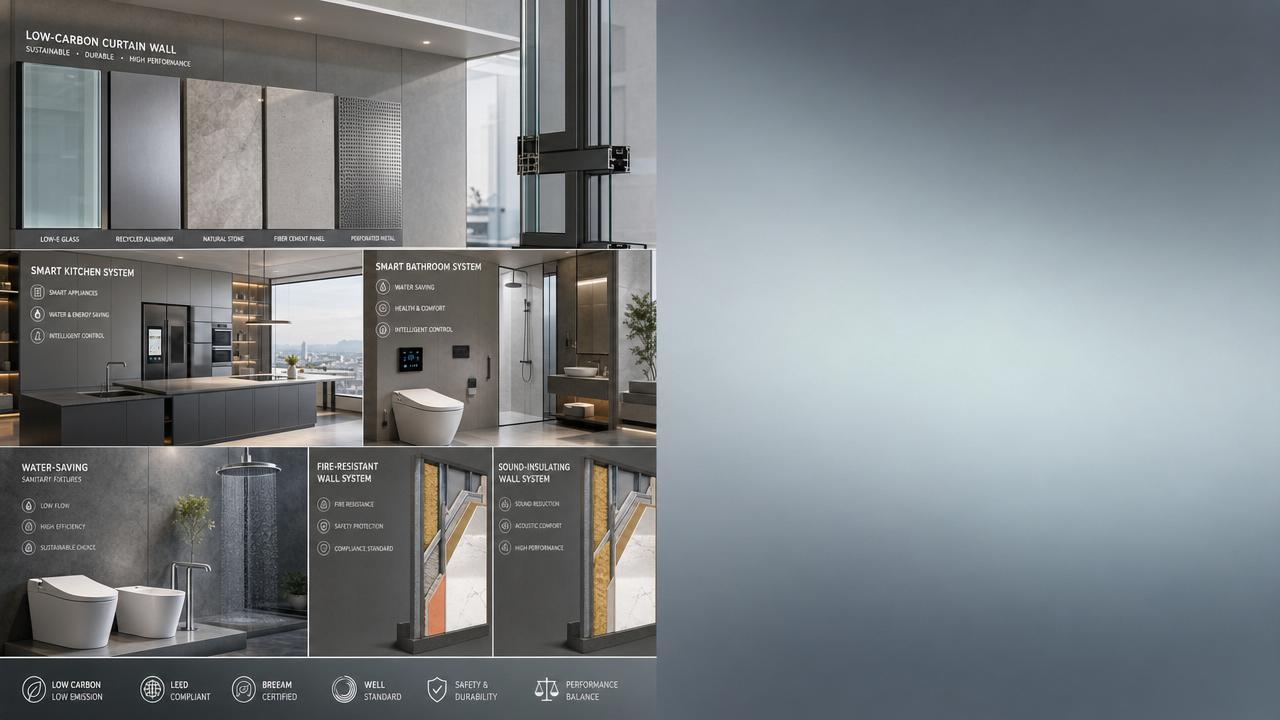
Several high-impact areas reveal where architectural design trends are heading. These zones combine aesthetics, public health, resource efficiency, and operational reliability.
- Low-carbon building materials with verified environmental declarations are becoming preferred specification choices.
- Antibacterial surfaces and easy-clean finishes are gaining importance in bathrooms, kitchens, healthcare, and hospitality projects.
- Water-saving sanitary systems are moving from optional upgrades to baseline project requirements.
- Smart locks, occupancy controls, and connected fixtures are entering code-sensitive planning conversations earlier.
- Fire-rated assemblies and acoustic performance are being integrated without sacrificing visual consistency.
These changes show that architectural design trends are no longer isolated style movements. They are system-level responses to cost pressure, regulation, and higher expectations for lived experience.
Why these architectural design trends are accelerating
The current wave of change is being driven by several overlapping forces. Each one pushes projects toward a tighter balance between style and compliance.
Together, these pressures explain why architectural design trends are becoming more evidence-based. Good design now depends on how well creative ideas survive technical review.
Compliance is no longer a late-stage check
One of the biggest shifts is timing. Compliance used to appear as a checkpoint after major design decisions. Today, it shapes the design brief itself.
This affects product selection, detailing depth, and coordination between architecture, interiors, water systems, and smart devices. A beautiful concept can fail if supporting documents are weak.
Architectural design trends therefore favor solutions with transparent testing, certifications, and installation guidance. Simpler approval paths often become a strategic design advantage.
What this means in practical terms
- Material claims must be documented, not implied.
- Wet-area assemblies need compatible components, not isolated products.
- Smart controls must support both usability and legal requirements.
- Design revisions should account for maintenance access and replacement cycles.
How these trends affect different business links in the value chain
The impact of architectural design trends is broad because style and compliance connect many decision points. A change in one specification can affect approval speed, installation complexity, and long-term operation.
For material development, the priority shifts toward traceability, circularity, and tested performance. For interior systems, the focus moves toward integration, user safety, and cross-platform compatibility.
Sanitary and kitchen-bath solutions face even closer review. Water efficiency, hygiene, anti-leak logic, sensor reliability, and maintenance simplicity are becoming design-critical attributes.
In commercial projects, architectural design trends also influence premium positioning. High-value spaces are increasingly defined by measurable comfort, sustainability credibility, and low disruption during operation.
The next priority is balancing brand expression with regulatory confidence
Distinctive design remains important. However, visual identity now performs best when it sits on a foundation of proven safety, environmental logic, and technical coherence.
This is where GIAM’s intelligence model becomes relevant. By connecting sector news, material evolution, and market scanning, it helps turn fragmented technical signals into usable strategic direction.
In a market defined by fast-moving architectural design trends, intelligence reduces blind spots. It supports better alignment between aesthetics, building standards, trade shifts, and future demand in smart living spaces.
Key points worth close attention
- Track code updates affecting energy, accessibility, water use, and fire safety.
- Review whether material innovation also improves documentation quality.
- Prioritize sanitary and kitchen-bath systems with measurable lifecycle value.
- Assess smart devices for interoperability, privacy, and maintenance support.
- Use commercial insight to identify where premium compliant design is growing fastest.
A practical framework for responding to architectural design trends
A structured response can reduce design risk while preserving creative intent. The following approach supports better decisions across materials, interiors, and intelligent building systems.
This framework reflects the real direction of architectural design trends. The goal is not to reduce creativity, but to make creativity durable, approvable, and scalable.
The strongest advantage will come from informed next moves
Architectural design trends will continue to reward projects that combine style with technical confidence. The winning spaces will look refined, perform responsibly, and adapt to future standards without major disruption.
GIAM’s mission fits this moment closely. By linking building industrial foundations with spatial intelligence, the platform supports better interpretation of green materials, sanitary innovation, and smart living systems.
The practical next step is simple. Review current specifications, compare them against evolving compliance demands, and identify where design ambition can be strengthened by verified intelligence rather than guesswork.
That is how architectural design trends become more than inspiration. They become a reliable path toward safer buildings, stronger value, and better everyday space performance.
Industry Briefing
Get the top 5 industry headlines delivered to your inbox every morning.