What architectural intelligence changes in modern buildings
Architectural intelligence is reshaping modern buildings by turning materials, systems, and spatial design into measurable performance assets. For technical evaluation, this shift reaches far beyond basic automation. It connects energy use, hygiene, water efficiency, smart access, and lifecycle value within one decision logic. In today’s built environment, understanding architectural intelligence is essential for judging compliance, resilience, user experience, and long-term project competitiveness.
What does architectural intelligence mean in modern buildings?
Architectural intelligence describes buildings that sense, respond, record, and improve performance through integrated design. It combines digital controls, smart materials, connected fixtures, and data-guided operation.
The concept includes more than software. It also includes healthier surfaces, efficient hydraulic systems, adaptive lighting, secure access, and layouts that support changing use patterns.
In practical terms, architectural intelligence turns every major component into a decision point. Walls, tiles, taps, locks, ventilation, and kitchens all contribute to measurable building outcomes.
This matters because modern buildings face stricter energy standards, stronger hygiene expectations, and growing pressure to reduce operating waste. Architectural intelligence helps align these goals without separating design from engineering.
- Sensors reveal actual use, not guessed use.
- Smart controls reduce energy and water loss.
- Advanced materials improve hygiene and durability.
- Connected systems strengthen maintenance planning.
- Integrated data improves compliance reporting.
For GIAM’s focus areas, architectural intelligence links core building materials with sanitary spaces and smart kitchen and bath systems. That connection defines how modern space creates both functional and commercial value.
How does architectural intelligence change building performance?
The biggest change is that performance becomes visible. Traditional buildings often hide inefficiency until energy bills rise or occupant complaints increase.
Architectural intelligence creates feedback loops. It tracks occupancy, airflow, water use, touch frequency, indoor temperature, and equipment behavior in real operating conditions.
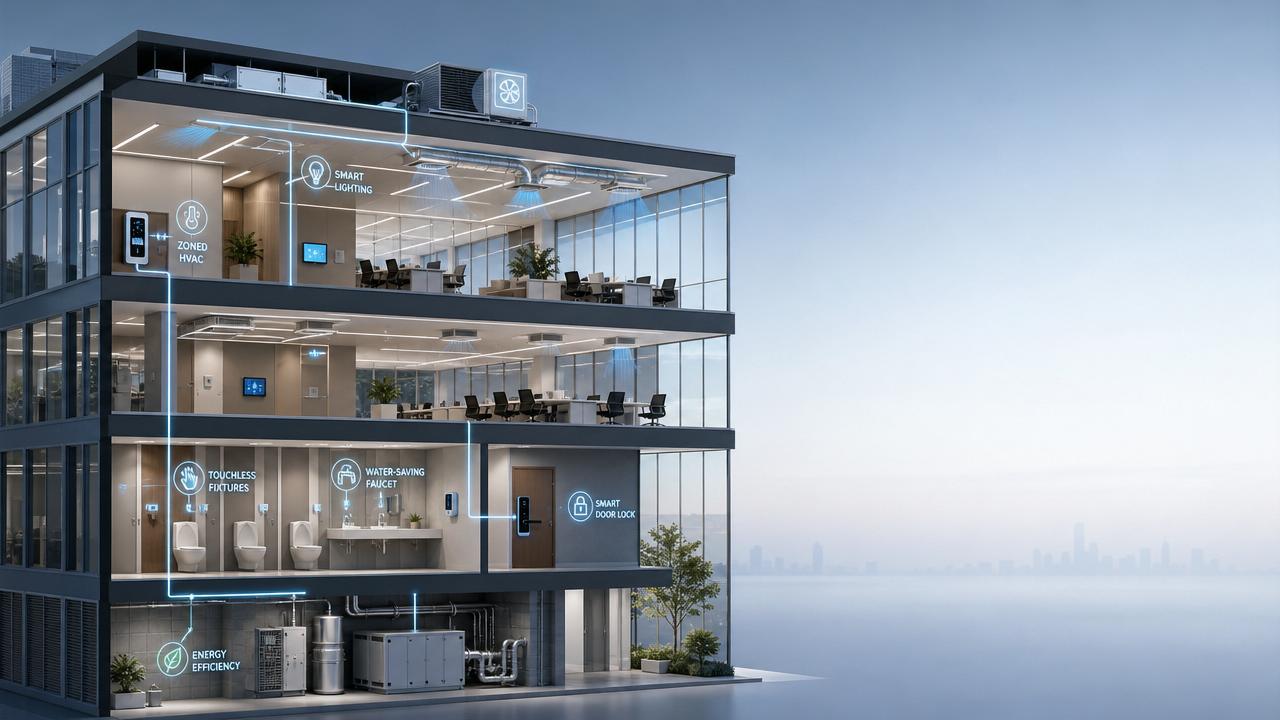
This improves energy management first. Smart glazing, occupancy-based lighting, zoned HVAC, and predictive controls reduce waste while keeping spaces comfortable and usable.
It also upgrades hygiene control. Anti-bacterial materials, touchless sanitary systems, and water circulation monitoring support healthier environments in residential and commercial spaces.
Water management becomes more strategic. Leak detection, pressure balancing, smart faucets, and low-flow systems protect both sustainability targets and operating budgets.
Security changes as well. Smart locks, credential management, and access logs make entry systems easier to audit and adapt to changing occupancy models.
Key performance areas affected by architectural intelligence
Which building components show the clearest architectural intelligence changes?
Not every upgrade carries equal impact. Some components become far more valuable when they are connected to operational data and performance goals.
Materials and surfaces
Materials are no longer selected only for appearance and cost. Architectural intelligence gives priority to durability, cleanability, thermal behavior, and microbial resistance.
This is especially visible in tiles, wall panels, sanitary partitions, countertops, and wet-area finishes. High-use spaces demand materials that support both design intent and measurable hygiene performance.
Sanitary spaces
Bathrooms now act as performance zones. Sensor faucets, touchless flushing, water-saving valves, and better drainage design all strengthen the architectural intelligence of the building.
These systems matter because sanitary spaces combine heavy usage, strict cleanliness needs, and direct water consumption. Small design changes can produce large lifecycle effects.
Smart kitchen and bath systems
Connected kitchen and bath products support convenience, safety, and energy control. Examples include smart mixers, digital showers, appliance coordination, and occupancy-aware ventilation.
Architectural intelligence is strongest when these devices integrate with the wider building logic instead of working as isolated premium features.
Entry and movement systems
Smart locks, lift coordination, visitor access tools, and zoning controls shape the movement of people. These functions directly influence security, efficiency, and user trust.
How can architectural intelligence be evaluated before adoption?
A common mistake is judging architectural intelligence by visible technology alone. Screens and apps may look advanced while delivering weak building value.
A better evaluation starts with outcomes. Ask what problem the system solves, what data it captures, and how it affects compliance, maintenance, and lifecycle costs.
Useful evaluation questions
- Does the solution reduce energy, water, labor, or failure risk?
- Can the data be integrated with existing building systems?
- Are the materials and devices durable in daily operating conditions?
- Will the solution support evolving standards and reporting needs?
- Is maintenance simple, or does complexity create future burden?
Architectural intelligence should also be tested against the building type. A residential tower, a hospitality property, and a commercial workspace may need different levels of integration.
When comparing options, focus on interoperability. The strongest architectural intelligence strategy connects materials, sanitary systems, access control, and environmental management through consistent data logic.
What risks and misunderstandings often limit architectural intelligence?
One major misunderstanding is treating architectural intelligence as a luxury layer. In reality, it increasingly supports compliance, cost control, and asset competitiveness.
Another risk is over-specification. Too many disconnected smart devices create data noise, maintenance friction, and user confusion.
There is also a materials gap. Digital systems cannot compensate for weak surfaces, poor water design, or low-quality hardware. Architectural intelligence depends on strong physical foundations.
Cybersecurity and data privacy deserve attention as well. Smart access, occupancy tracking, and cloud-linked controls need clear governance, especially in mixed-use environments.
Common pitfalls and better responses
How should future-ready projects respond to architectural intelligence changes?
Future-ready projects should begin with an intelligence map. This means identifying where materials, water systems, sanitary zones, energy controls, and access points can generate usable insight.
The next step is setting measurable priorities. Typical targets include lower energy intensity, improved indoor hygiene, reduced leakage risk, stronger security, and easier maintenance reporting.
Architectural intelligence works best when design teams and technical teams share one framework. Decisions about tiles, fittings, valves, locks, and interfaces should support the same operational goals.
Reliable intelligence sources also matter. GIAM’s approach highlights how sector news, market scanning, and trend analysis can clarify where anti-bacterial materials, water-saving technologies, and smart systems create real project value.
In many cases, the most effective move is phased adoption. Start with high-impact zones such as sanitary spaces, smart kitchen and bath systems, and access control. Then expand integration over time.
Quick decision guide
- Choose architectural intelligence features tied to measurable outcomes.
- Balance digital capability with durable material selection.
- Review standards, tariffs, and lifecycle implications early.
- Prefer interoperable systems over isolated premium products.
- Build maintenance, training, and data governance into planning.
Architectural intelligence is changing modern buildings by making performance visible, coordinated, and continuously improvable. It connects building materials, sanitary spaces, water systems, and smart access into one strategic framework.
The most valuable response is not simply adding more technology. It is choosing the right intelligence at the right layer of the building. Review high-impact systems first, compare lifecycle value carefully, and use trusted industry intelligence to guide the next upgrade path.
Industry Briefing
Get the top 5 industry headlines delivered to your inbox every morning.